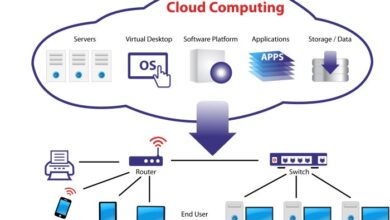
In today’s digital realm, businesses navigate the ever-evolving landscape of cloud computing, grappling with the choice between hybrid cloud and multi cloud architectures. This article delves into the intricacies of each approach, unraveling their fundamental differences, key benefits, and potential drawbacks.
By exploring real-world examples and industry insights, we aim to equip readers with the knowledge to make informed decisions about their cloud strategy.
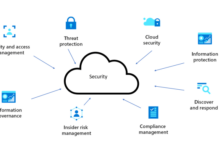
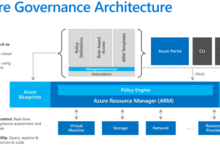

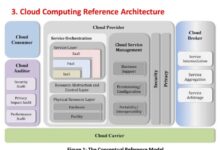
As organizations strive for agility, scalability, and cost optimization, understanding the nuances of hybrid cloud and multi cloud becomes paramount. This comprehensive guide provides a roadmap for navigating the complexities of cloud architectures, empowering businesses to harness the full potential of cloud computing.
Hybrid Cloud vs Multi Cloud: A Comprehensive Comparison
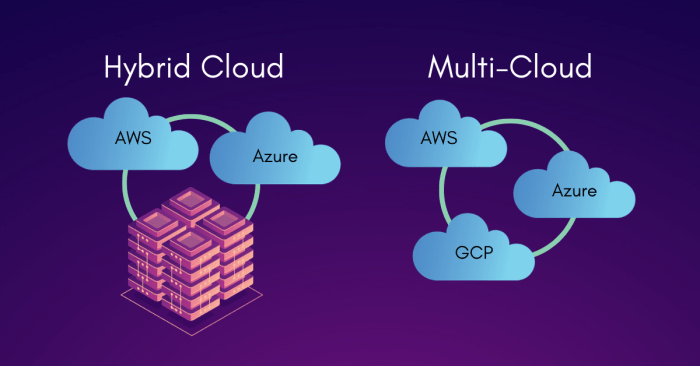
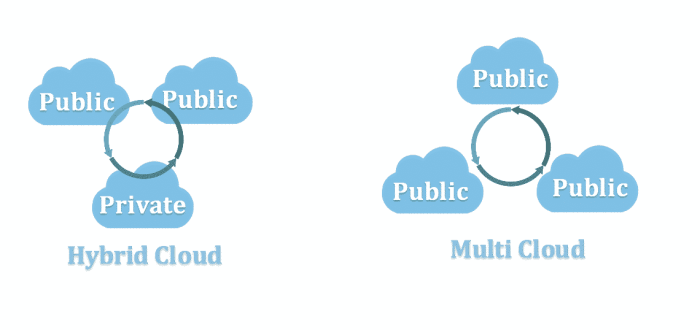
Hybrid and multi cloud architectures have emerged as prominent solutions for organizations seeking flexibility and scalability in their IT infrastructure. Understanding the differences between these approaches is crucial for making informed decisions.Hybrid cloud refers to the integration of on-premises infrastructure with public cloud services, providing a seamless blend of private and public resources.
On the other hand, multi cloud involves the use of multiple public cloud services from different providers, enabling organizations to leverage the unique strengths of each platform.
Benefits of Hybrid Cloud
Hybrid cloud offers several advantages, including:
- Flexibility: Organizations can allocate workloads between on-premises and public cloud environments based on specific requirements.
- Security: Sensitive data can be stored and processed on-premises while leveraging the scalability and cost-effectiveness of public cloud for non-critical workloads.
- Compliance: Hybrid cloud enables organizations to meet regulatory and compliance requirements by keeping sensitive data within their own infrastructure.
Benefits of Multi Cloud
Multi cloud also offers significant benefits:
- Vendor Lock-In Avoidance: Organizations can avoid dependency on a single cloud provider by distributing workloads across multiple platforms.
- Best-of-Breed Services: Multi cloud allows organizations to select the most suitable cloud services from different providers, tailoring their infrastructure to specific needs.
- Resiliency: By utilizing multiple cloud providers, organizations can enhance the resilience of their IT infrastructure, minimizing the impact of outages or disruptions.
Drawbacks of Hybrid Cloud
Despite its advantages, hybrid cloud also has some drawbacks:
- Complexity: Managing a hybrid cloud environment can be complex, requiring expertise in both on-premises and public cloud technologies.
- Security Concerns: Maintaining data security across multiple environments can be challenging, especially when integrating on-premises and public cloud resources.
- Cost: Implementing and maintaining a hybrid cloud infrastructure can be more expensive compared to a single cloud environment.
Drawbacks of Multi Cloud
Multi cloud also has some challenges:
- Complexity: Managing multiple cloud platforms can be complex, requiring expertise in different cloud technologies and APIs.
- Data Integration: Integrating data and applications across multiple cloud environments can be challenging, potentially leading to data silos and inconsistencies.
- Cost: Using multiple cloud providers can result in increased costs due to subscription fees, data transfer charges, and the need for additional resources.
Real-World Examples
Numerous organizations have successfully implemented hybrid and multi cloud solutions to achieve their business objectives:
- Hybrid Cloud: Toyota Motor Corporation uses a hybrid cloud approach to manage its IT infrastructure, combining on-premises data centers with public cloud services from Amazon Web Services (AWS) and Microsoft Azure.
- Multi Cloud: Netflix leverages a multi cloud strategy, utilizing services from AWS, Google Cloud Platform (GCP), and Microsoft Azure to power its streaming platform, ensuring scalability and resilience.
Hybrid Cloud
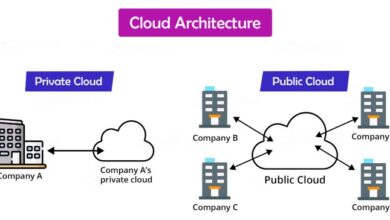
A hybrid cloud environment combines the resources and services of both public and private clouds, enabling organizations to create a customized cloud infrastructure that meets their unique requirements. This approach offers the flexibility and scalability of public clouds while maintaining the security and control of private clouds.
Types of Hybrid Cloud Models
There are three primary types of hybrid cloud models:
- Private Cloud: A private cloud is a cloud infrastructure dedicated to a single organization. It provides the highest level of security and control but can be more expensive than public cloud services.
- Public Cloud: A public cloud is a cloud infrastructure shared by multiple organizations. It offers cost-effectiveness and scalability but provides less control and security than private clouds.
- On-Premises: On-premises refers to an organization’s own data center and infrastructure. It offers complete control and security but can be more expensive and less flexible than cloud-based solutions.
Challenges and Best Practices of Hybrid Cloud Implementation
Implementing a hybrid cloud environment comes with its own set of challenges and best practices:
- Security and Compliance: Ensuring the security and compliance of data and applications across different cloud environments can be a challenge. Best practices include implementing robust security measures, such as encryption, access control, and regular security audits.
- Data Integration and Management: Integrating and managing data across different cloud environments can be complex. Best practices include using data integration tools, implementing data governance policies, and establishing a centralized data management platform.
- Performance and Availability: Ensuring consistent performance and availability of applications and services across different cloud environments can be challenging. Best practices include optimizing network connectivity, using load balancing techniques, and implementing disaster recovery plans.
Multi Cloud: Embracing a Diverse Cloud Landscape
A multi cloud environment is a cloud computing architecture that involves the use of multiple cloud services and providers to create a single, unified cloud platform. This approach enables organizations to distribute their applications and data across different cloud platforms, taking advantage of the unique strengths and capabilities of each provider.Adopting
a multi cloud strategy offers several key advantages:
- Increased Flexibility: Multi cloud provides greater flexibility in choosing the right cloud platform for specific workloads and applications. Organizations can select the provider that best aligns with their technical requirements, cost considerations, and regulatory compliance needs.
- Enhanced Reliability: By distributing applications and data across multiple cloud providers, organizations can minimize the risk of outages or disruptions caused by a single provider’s failure. This redundancy ensures higher availability and reliability of critical applications.
- Cost Optimization: Multi cloud allows organizations to optimize costs by leveraging the pricing advantages and discounts offered by different cloud providers. They can allocate workloads to the most cost-effective provider based on usage patterns and resource requirements.
- Vendor Lock-In Avoidance: A multi cloud strategy reduces the risk of vendor lock-in, which occurs when an organization becomes overly dependent on a single cloud provider. By utilizing multiple providers, organizations maintain flexibility in moving their applications and data to alternative platforms if necessary.
However, managing multiple cloud providers also presents challenges and considerations:
- Complexity: Managing multiple cloud platforms can be complex, requiring specialized skills and expertise in different cloud environments. Organizations need to invest in tools and processes to integrate and orchestrate workloads across different providers.
- Data Security and Compliance: Ensuring data security and compliance across multiple cloud providers can be challenging. Organizations need to implement robust security measures and establish clear policies and procedures to protect data and maintain compliance with regulatory requirements.
- Vendor Management: Dealing with multiple cloud providers requires effective vendor management practices. Organizations need to establish clear contracts, service-level agreements (SLAs), and performance monitoring mechanisms to ensure reliable and consistent service delivery from each provider.
Overall, a multi cloud strategy offers significant benefits in terms of flexibility, reliability, cost optimization, and vendor lock-in avoidance. However, organizations need to carefully consider the challenges and complexities involved in managing multiple cloud providers to ensure a successful implementation.
Hybrid Cloud vs Multi Cloud: Choosing the Right Approach
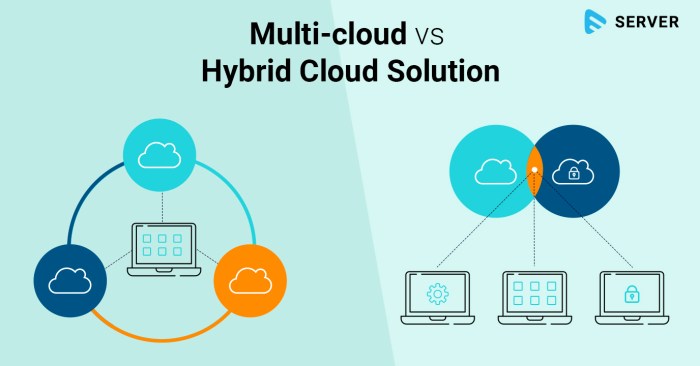
Organizations are increasingly adopting cloud computing to gain agility, scalability, and cost-effectiveness. However, choosing the right cloud strategy can be a daunting task, with various options available such as hybrid cloud and multi cloud. This section provides a comprehensive comparison of hybrid and multi cloud, a decision-making framework for selecting the most suitable approach, and insights into emerging trends and future developments in these cloud computing models.
Hybrid Cloud vs Multi Cloud: Key Differences
Hybrid cloud and multi cloud are two distinct approaches to cloud computing that offer different benefits and challenges. The following table highlights the key differences between these two models:
| Feature | Hybrid Cloud | Multi Cloud |
|---|---|---|
| Definition | Combination of on-premises infrastructure and public cloud services | Using multiple public cloud services from different providers |
| Control | Organizations have more control over their on-premises infrastructure | Organizations have less control over their cloud environments |
| Security | Can be more secure due to the isolation of on-premises infrastructure | Can be more complex to manage security across multiple cloud providers |
| Cost | Can be more cost-effective for organizations with existing on-premises infrastructure | Can be more cost-effective for organizations with workloads that require different cloud services |
| Flexibility | Offers more flexibility to organizations to customize their cloud environments | Offers more flexibility to organizations to choose the best cloud services for their workloads |
| Scalability | Can be more scalable than a single public cloud provider | Can be more scalable than a single on-premises infrastructure |
| Management | Can be more complex to manage due to the integration of on-premises and cloud environments | Can be more complex to manage due to the need to work with multiple cloud providers |