In the ever-evolving realm of information technology, cloud architecture stands as a pivotal force, revolutionizing the way organizations store, manage, and process data. This comprehensive exploration delves into the dynamic trends shaping cloud architecture, examining the key drivers, challenges, and innovations that are redefining the landscape of modern IT infrastructure.
As we traverse this journey, we will uncover the intricacies of hybrid and multi-cloud strategies, delving into real-world examples and dissecting the benefits and challenges they present. We will explore the transformative power of serverless computing, unveiling its advantages and witnessing its impact on development and operations.
Additionally, we will investigate the role of microservices and containers in modern cloud architecture, unraveling their contributions to scalability and agility.
Cloud Architecture Trends
Cloud architecture plays a pivotal role in the modern IT infrastructure, enabling organizations to leverage scalable, cost-effective, and agile computing solutions. This transformative technology has reshaped the way businesses operate, empowering them with unprecedented flexibility, scalability, and global reach.
The evolution of cloud architecture is driven by several key factors, including the increasing demand for on-demand resources, the need for improved agility and scalability, and the desire to optimize costs. However, this dynamic landscape also presents challenges, such as security concerns, data privacy issues, and the complexity of managing hybrid and multi-cloud environments.
Drivers of Cloud Architecture Trends
The primary drivers of cloud architecture trends include:
- Cost Optimization: Cloud computing offers a pay-as-you-go pricing model, allowing businesses to scale their resources based on demand and avoid upfront capital investments.
- Agility and Scalability: Cloud platforms enable organizations to quickly provision and de-provision resources, adapting to changing business needs and accommodating seasonal fluctuations in demand.
- Global Reach: Cloud services are available worldwide, providing businesses with the ability to expand their operations into new markets and reach a global audience.
- Innovation and Agility: Cloud platforms offer access to cutting-edge technologies and services, fostering innovation and enabling businesses to stay competitive in a rapidly evolving digital landscape.
Challenges in Cloud Architecture
Despite its numerous advantages, cloud architecture also presents several challenges:
- Security and Data Privacy: Cloud environments can introduce new security risks, such as unauthorized access, data breaches, and compliance issues. Organizations must implement robust security measures to protect their data and maintain compliance with regulatory requirements.
- Complexity of Hybrid and Multi-Cloud Environments: Many organizations operate in hybrid or multi-cloud environments, which can increase complexity and introduce challenges in managing and securing these diverse infrastructures.
- Vendor Lock-In: Relying on a single cloud provider can lead to vendor lock-in, limiting an organization’s flexibility and increasing costs. Organizations should consider multi-cloud strategies to avoid vendor lock-in and maintain flexibility.
Hybrid and Multi-Cloud Strategies
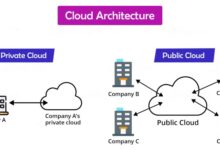
Organizations are increasingly adopting hybrid and multi-cloud strategies to optimize their cloud infrastructure and gain the benefits of both on-premises and cloud computing. A hybrid cloud combines on-premises infrastructure with public cloud services, while a multi-cloud strategy involves using multiple public cloud providers.
Hybrid and multi-cloud architectures provide organizations with greater flexibility, scalability, and cost-effectiveness. They can also help organizations to reduce risk and improve security by distributing their data and applications across multiple platforms.
Benefits of Hybrid and Multi-Cloud Strategies
- Flexibility: Hybrid and multi-cloud strategies allow organizations to choose the best cloud platform for each workload, based on factors such as cost, performance, and security.
- Scalability: Hybrid and multi-cloud strategies can help organizations to scale their IT infrastructure quickly and easily, to meet changing business needs.
- Cost-effectiveness: Hybrid and multi-cloud strategies can help organizations to save money by using the most cost-effective cloud platform for each workload.
- Risk reduction: Hybrid and multi-cloud strategies can help organizations to reduce risk by distributing their data and applications across multiple platforms, making them less vulnerable to a single point of failure.
- Improved security: Hybrid and multi-cloud strategies can help organizations to improve security by implementing different security measures on each platform, making it more difficult for attackers to compromise the entire IT infrastructure.
Challenges and Considerations for Organizations Adopting Hybrid and Multi-Cloud Strategies
While hybrid and multi-cloud strategies offer many benefits, there are also some challenges and considerations that organizations need to be aware of before adopting these strategies.
- Complexity: Hybrid and multi-cloud strategies can be more complex to manage than single-cloud strategies, as organizations need to manage multiple platforms and ensure that they are all working together properly.
- Cost: Hybrid and multi-cloud strategies can be more expensive than single-cloud strategies, as organizations need to pay for multiple cloud platforms and manage the additional complexity.
- Security: Hybrid and multi-cloud strategies can introduce new security risks, as organizations need to ensure that their data and applications are secure on all platforms.
- Compliance: Hybrid and multi-cloud strategies can make it more difficult for organizations to comply with regulations, as they need to ensure that their data and applications are compliant on all platforms.
Serverless Computing
Serverless computing, also known as Function-as-a-Service (FaaS), is a cloud computing model that allows developers to build and deploy applications without having to manage the underlying infrastructure. With serverless computing, developers can focus on writing code and delivering value, while the cloud provider takes care of provisioning, scaling, and managing the servers.Serverless
computing offers several advantages, including:*
-*Reduced costs
Developers only pay for the resources they use, eliminating the need to purchase and maintain servers.
-
-*Improved scalability
Serverless applications can scale automatically to meet demand, ensuring that they are always available and responsive.
-*Increased agility
Developers can deploy applications quickly and easily, without having to worry about the underlying infrastructure.
-*Simplified operations
Serverless applications are easier to manage than traditional applications, as there is no need to patch or update servers.
Real-World Examples of Serverless Applications
Serverless computing is being used in a variety of real-world applications, including:*
-*Web applications
Serverless applications can be used to build dynamic and interactive web applications that can scale to handle large amounts of traffic.
-
-*Mobile applications
Serverless applications can be used to build mobile applications that can access data and functionality from the cloud.
-*Data processing
Serverless applications can be used to process large amounts of data in a scalable and cost-effective manner.
-*Machine learning
Serverless applications can be used to train and deploy machine learning models.
The impact of serverless computing on development and operations has been significant. Serverless computing has made it easier and faster for developers to build and deploy applications, and it has also reduced the cost and complexity of managing applications.
Microservices and Containers
Microservices and containers are two fundamental concepts in modern cloud architecture that are revolutionizing the way applications are designed, deployed, and managed.Microservices are an architectural style where a single application is composed of multiple, independent, and loosely coupled services. Each microservice performs a specific function and communicates with other microservices through well-defined interfaces.
This modular approach offers several advantages, including increased scalability, agility, and fault tolerance.Containers, on the other hand, are a lightweight virtualization technology that packages an application and its dependencies into a single, portable unit. Containers allow applications to run in a consistent and isolated environment, regardless of the underlying infrastructure.
This makes them ideal for deploying and managing microservices, as well as other cloud-native applications.
Benefits of Using Microservices and Containers
There are numerous benefits to using microservices and containers in cloud architecture. These include:
- Scalability: Microservices and containers enable horizontal scaling, where additional instances of a service can be easily added or removed to meet changing demands.
- Agility: Microservices and containers allow for rapid application development and deployment. Changes to one microservice can be made without affecting the entire application.
- Fault Tolerance: Microservices and containers provide isolation between services, which helps to prevent a failure in one service from affecting other services.
- Resource Utilization: Containers are lightweight and efficient, which can help to reduce resource consumption and costs.
- Portability: Containers can be deployed on any platform that supports containerization, providing greater portability and flexibility.
Edge Computing
Edge computing is a distributed computing paradigm that brings computation and data storage closer to the devices where it is needed, such as sensors, actuators, and other devices at the edge of the network. This approach reduces latency, improves performance, and enables real-time decision-making.
Edge computing is used in various industries, including:
- Manufacturing: Edge computing enables real-time monitoring and control of industrial machinery, predictive maintenance, and quality control.
- Retail: Edge computing enables personalized shopping experiences, real-time inventory management, and fraud detection.
- Healthcare: Edge computing enables remote patient monitoring, real-time data analysis, and personalized treatment plans.
- Transportation: Edge computing enables autonomous vehicles, traffic management, and real-time route optimization.
Challenges and Opportunities
Edge computing offers several advantages, but it also presents challenges: Challenges:
- Security: Edge devices are often more vulnerable to cyberattacks due to their distributed nature and limited resources.
- Data Management: Managing and securing data across a large number of edge devices can be complex.
- Interoperability: Ensuring that edge devices and applications from different vendors can communicate and work together can be challenging.
Opportunities:
- Improved Performance: Edge computing can significantly reduce latency and improve performance by bringing computation and data storage closer to the devices where it is needed.
- Cost Savings: Edge computing can reduce costs by reducing the amount of data that needs to be transmitted to the cloud.
- Increased Flexibility: Edge computing enables organizations to deploy applications and services closer to their customers, providing greater flexibility and agility.
Overall, edge computing is a promising technology that has the potential to revolutionize various industries. By addressing the challenges and leveraging the opportunities, organizations can unlock the full potential of edge computing and gain a competitive advantage.
Artificial Intelligence and Machine Learning
Artificial Intelligence (AI) and Machine Learning (ML) are rapidly transforming cloud architecture, enabling new levels of automation, efficiency, and insights. Cloud platforms provide the scalable infrastructure and tools necessary for organizations to adopt and integrate AI and ML technologies seamlessly.
Integration of AI and ML in Cloud Architecture
Cloud providers offer a wide range of AI and ML services, including pre-trained models, APIs, and development platforms, making it easier for organizations to incorporate AI and ML capabilities into their cloud-based applications and services. These services enable organizations to automate tasks, enhance decision-making, and deliver personalized experiences to their customers.
Examples of AI and ML Transforming Cloud-based Applications and Services
- Natural Language Processing (NLP): AI-powered NLP services analyze and interpret unstructured text data, enabling applications to understand and respond to human language. This technology is used in chatbots, virtual assistants, and sentiment analysis tools.
- Computer Vision: AI-powered computer vision services process and analyze images and videos, enabling applications to recognize objects, faces, and scenes. This technology is used in image classification, object detection, and facial recognition systems.
- Predictive Analytics: ML algorithms analyze historical data to identify patterns and make predictions about future events. This technology is used in recommendation engines, fraud detection systems, and supply chain optimization tools.
- Machine Learning as a Service (MLaaS): Cloud providers offer MLaaS platforms that provide organizations with the infrastructure and tools necessary to train and deploy ML models without the need for specialized hardware or expertise.
Security and Compliance
In the realm of cloud architecture, security and compliance stand as paramount considerations, demanding meticulous attention to ensure the integrity and confidentiality of data and systems. As organizations increasingly entrust their critical assets to the cloud, the onus falls upon architects to implement robust security measures and adhere to stringent compliance standards.
Best practices for securing cloud environments encompass a multi-pronged approach, encompassing:
- Encryption: Encrypt data both at rest and in transit, employing robust encryption algorithms and key management strategies.
- Access Control: Implement granular access controls, granting users and applications only the privileges necessary to perform their designated tasks.
- Vulnerability Management: Continuously assess and remediate vulnerabilities in cloud infrastructure, applications, and software components.
- Security Monitoring: Employ security monitoring tools and services to detect and respond to security incidents promptly.
- Incident Response: Develop and implement comprehensive incident response plans to effectively manage and mitigate security breaches.
Compliance
In addition to security measures, cloud architects must ensure compliance with relevant regulations and industry standards. This involves:
- Regulatory Compliance: Adhering to regulatory requirements such as GDPR, HIPAA, and PCI DSS, which govern the handling of sensitive data.
- Industry Standards: Complying with industry-specific standards such as ISO 27001 and NIST 800-53, which provide frameworks for information security management.
- Contractual Compliance: Ensuring compliance with the terms and conditions of cloud service agreements, which often include specific security and compliance obligations.
Cost Optimization
Organizations face the challenge of balancing their cloud resource consumption with their financial constraints. To address this, cost optimization strategies have emerged as a critical aspect of cloud architecture.A comprehensive approach to cost optimization involves understanding resource utilization, implementing cost-effective architectures, leveraging automation, and employing monitoring and analytics tools.
Organizations can significantly reduce their cloud expenses by optimizing their cloud environments and maximizing resource utilization.
Practical Tips for Cost Optimization
- Rightsizing Resources: Assess resource requirements and scale resources based on actual usage patterns to avoid overprovisioning.
- Leverage Spot Instances: Utilize spot instances, which are unused cloud resources available at a discounted price, to save on compute costs.
- Implement Reserved Instances: Purchase reserved instances for predictable workloads to secure discounted pricing and capacity.
- Optimize Storage Costs: Use cost-effective storage options such as standard storage or archive storage for data with different access frequency and retention requirements.
- Enable Cost Allocation and Tagging: Assign tags to cloud resources to track and allocate costs to specific departments or projects for better cost management.
- Use Cloud Cost Optimization Tools: Employ cloud-provided cost optimization tools or third-party solutions to monitor and analyze cloud usage and identify cost-saving opportunities.
Sustainability and Green Cloud Computing
With the escalating demand for cloud services, concerns about the environmental impact of data centers have come to the forefront. Green cloud computing aims to reduce the carbon footprint of cloud operations and promote sustainable practices.
Cloud Providers’ Role in Sustainability
Cloud providers play a pivotal role in driving sustainability initiatives. They can:
Adopt Renewable Energy Sources
Power data centers with renewable energy sources like solar, wind, and hydroelectricity.
Optimize Energy Efficiency
Implement energy-efficient technologies, such as server virtualization, to minimize power consumption.
Design Energy-Efficient Data Centers
Construct data centers with efficient cooling systems and optimized airflow management to reduce energy usage.
Offer Green Cloud Services
Provide cloud services specifically designed to minimize environmental impact, such as carbon-neutral cloud regions.
Promote Sustainable Practices
Encourage customers to adopt sustainable cloud practices, such as right-sizing resources and using cloud services efficiently.
Emerging Trends and Future Outlook
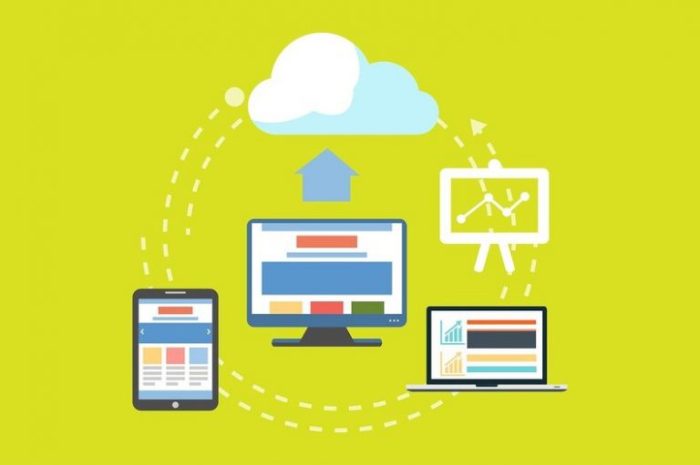
The realm of cloud architecture is in a state of perpetual evolution, with emerging trends and innovations constantly reshaping its landscape. These advancements hold the potential to transform cloud computing and IT infrastructure in profound ways, bringing about enhanced efficiency, agility, and innovation.
One notable trend is the rise of cloud-native technologies , which are specifically designed for the cloud environment and leverage its inherent advantages. These technologies, such as containers, microservices, and serverless computing, enable developers to build and deploy applications more quickly and efficiently, leading to improved agility and scalability.
Another emerging trend is the increasing adoption of hybrid and multi-cloud strategies . Organizations are recognizing the benefits of using a combination of public, private, and edge clouds to optimize performance, cost, and security. This approach allows them to leverage the strengths of each cloud environment while mitigating potential risks.
Quantum Computing
The advent of quantum computing has the potential to revolutionize cloud architecture. Quantum computers, with their ability to solve complex problems exponentially faster than traditional computers, could lead to breakthroughs in areas such as cryptography, optimization, and machine learning. While still in its early stages of development, quantum computing holds immense promise for the future of cloud architecture.
Augmented Reality and Virtual Reality
The integration of augmented reality (AR) and virtual reality (VR) technologies with cloud architecture is gaining traction. AR and VR applications, such as remote collaboration, virtual training, and immersive gaming, require high-bandwidth and low-latency networks, making the cloud an ideal platform for their delivery.
The convergence of these technologies could open up new possibilities for cloud-based applications and services.
Blockchain Technology
Blockchain technology, known for its decentralized and secure nature, is finding applications in cloud architecture. Blockchain can be used to enhance the security and integrity of data stored in the cloud, facilitate transparent and auditable transactions, and enable new decentralized cloud services.
As blockchain technology matures, it is expected to play a significant role in shaping the future of cloud architecture.
Last Word
In conclusion, the future of cloud architecture is brimming with potential, as emerging trends and innovations continue to reshape the landscape. These advancements hold the promise of enhanced efficiency, agility, and sustainability, propelling organizations towards a future of boundless possibilities.
As we embrace these transformative trends, we stand poised to unlock the full potential of cloud computing, driving innovation and shaping the trajectory of the digital age.