In the ever-evolving digital landscape, cloud architecture has emerged as a game-changer, transforming the way businesses operate and innovate. Embracing the cloud offers a plethora of advantages, ranging from cost optimization and scalability to enhanced collaboration and security. Join us as we delve into the profound benefits of cloud architecture and explore how it can revolutionize your business operations.
From optimizing IT costs and fostering innovation to ensuring business continuity and promoting environmental sustainability, cloud architecture presents a compelling value proposition. Dive into real-world examples and case studies that showcase the transformative impact of cloud solutions across industries. Discover how cloud architecture can empower your business to thrive in the digital age.

Cost Savings
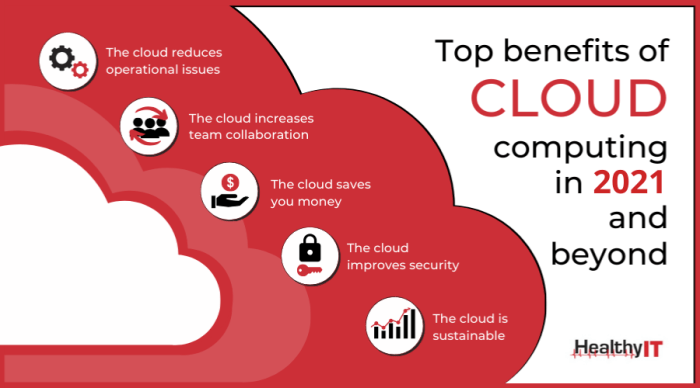
Cloud architecture’s pay-as-you-go model and optimized resource allocation significantly reduce IT expenses. Businesses can avoid overprovisioning hardware and software, eliminating upfront capital investments and ongoing maintenance costs.
The elasticity of cloud services allows businesses to scale resources up or down based on demand, ensuring they only pay for what they use. This flexibility eliminates the need for expensive hardware upgrades or the risk of underutilized resources.
Examples of Cost Reduction
- Netflix: By migrating to the cloud, Netflix saved millions of dollars in infrastructure costs and gained the agility to handle its rapidly growing user base.
- Airbnb: Airbnb’s cloud-based platform enabled it to scale its operations globally, reducing costs associated with data centers and IT staff.
- General Electric: GE realized significant savings by using cloud services for data storage and analytics, optimizing its IT infrastructure and improving operational efficiency.
Financial Benefits of Cloud Infrastructure
- Reduced Capital Expenditures: Cloud eliminates the need for large upfront investments in hardware and software, freeing up capital for other business initiatives.
- Improved Operational Efficiency: Automated cloud services streamline IT operations, reducing labor costs and increasing productivity.
- Enhanced Scalability: Cloud infrastructure enables businesses to scale resources quickly and cost-effectively, supporting growth and innovation.
- Risk Mitigation: Cloud providers handle security, compliance, and disaster recovery, reducing the financial burden of managing these aspects in-house.
Scalability and Flexibility
Cloud architecture has revolutionized the way businesses scale their operations. By providing on-demand resources, cloud solutions enable seamless expansion and contraction of IT infrastructure, ensuring businesses can adapt to changing demands without facing hardware limitations or lengthy procurement processes.
Real-World Examples of Scalability with Cloud
Numerous businesses have harnessed the power of cloud architecture to scale their operations effortlessly. Here are a few notable examples:
- Netflix: Netflix’s streaming service relies heavily on cloud infrastructure to handle its massive user base and fluctuating traffic patterns. The company’s cloud-based architecture allows it to scale its capacity seamlessly to meet the demand, ensuring uninterrupted streaming experiences for its users.
- Airbnb: Airbnb’s platform connects hosts and travelers worldwide, requiring a highly scalable infrastructure to accommodate its rapidly growing user base. By leveraging cloud architecture, Airbnb can easily scale its platform to meet the demands of its expanding community.
- Amazon: Amazon’s e-commerce platform experiences significant traffic spikes during peak shopping seasons. The company’s cloud-based infrastructure enables it to scale its capacity rapidly to handle the increased demand, ensuring smooth and efficient shopping experiences for its customers.
Accommodating Changing Business Needs
Cloud architecture provides businesses with the agility to adapt to changing market conditions, customer preferences, and technological advancements. Here are some advantages of cloud architecture in this regard:
- Rapid Deployment: Cloud-based solutions can be deployed quickly and easily, allowing businesses to launch new products or services in a matter of days or weeks, rather than months or years.
- Pay-as-You-Go Model: The cloud’s pay-as-you-go pricing model eliminates the need for large upfront investments in hardware and software. Businesses can scale their usage based on their current needs, reducing costs and improving financial flexibility.
- Access to Cutting-Edge Technologies: Cloud providers continuously invest in the latest technologies, such as artificial intelligence, machine learning, and data analytics. Businesses that leverage cloud architecture gain access to these technologies without the need for significant investments in research and development.
Improved Collaboration and Accessibility
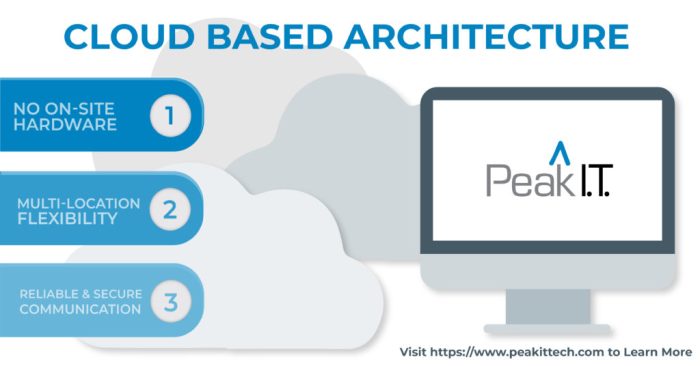
Cloud architecture promotes seamless collaboration by bridging the gap between teams and individuals. It offers a centralized platform that enables real-time communication, file sharing, and document co-authoring.
Cloud-based platforms like Google Workspace, Microsoft 365, and Slack have revolutionized teamwork. These tools provide a suite of applications for document sharing, video conferencing, and project management, enhancing team productivity and fostering a collaborative work environment.
Remote Access and Data Sharing
The cloud’s accessibility allows team members to access data and applications from anywhere with an internet connection. This flexibility is crucial for remote teams, enabling them to contribute effectively to projects and stay connected with colleagues.
The ability to share data securely with external stakeholders, such as clients or partners, further enhances collaboration. Cloud platforms provide controlled access mechanisms, ensuring data security while facilitating efficient collaboration.
Enhanced Security
Cloud architecture reinforces security through a multifaceted approach. It integrates sophisticated security features and protocols, ensuring protection against cyber threats and safeguarding sensitive data.
Security Features and Protocols
Cloud platforms commonly employ robust security measures, including:
- Encryption: Data encryption at rest and in transit ensures its protection during storage and transmission.
- Access Control: Granular access control mechanisms, such as role-based access control (RBAC), enable organizations to control user permissions and access rights.
- Multi-Factor Authentication: Additional authentication layers, like two-factor authentication (2FA), provide an extra layer of security to user accounts.
- Security Monitoring: Advanced monitoring tools continuously scan and analyze system activity for suspicious patterns, enabling rapid threat detection and response.
Real-Life Examples of Cloud Security Success
Organizations have experienced tangible benefits from cloud-based security solutions:
- Company A: A healthcare provider adopted a cloud-based security platform, resulting in a significant reduction in data breaches and enhanced compliance with industry regulations.
- Company B: A financial institution implemented a cloud-based intrusion detection system, effectively blocking unauthorized access attempts and preventing financial fraud.
- Company C: A retail chain deployed a cloud-based security solution, leading to improved protection against DDoS attacks and ensuring business continuity during peak shopping seasons.
Innovation and Agility
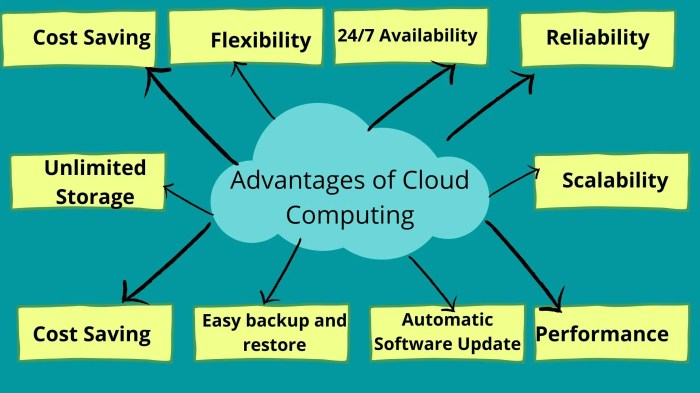
Cloud architecture serves as a catalyst for innovation and agility, enabling businesses to swiftly adapt to evolving market demands, seize new opportunities, and gain a competitive edge. The inherent flexibility of cloud services empowers organizations to experiment with novel ideas, launch new products or services rapidly, and respond promptly to customer feedback.
Case Studies:
Several notable businesses have leveraged cloud services to accelerate innovation and achieve remarkable success. For instance, Netflix, a global streaming giant, migrated its entire infrastructure to the cloud, enabling it to seamlessly scale its services to accommodate a surge in users during peak viewing times.
This agility allowed Netflix to introduce new features and content rapidly, contributing to its dominance in the streaming market.
Benefits of Cloud Architecture:
- Accelerated Time-to-Market: Cloud architecture significantly reduces the time required to bring new products or services to market. Businesses can quickly provision and configure cloud resources, eliminating the need for lengthy procurement and deployment processes associated with traditional on-premises infrastructure.
- Enhanced Experimentation and Iteration: The cloud provides a sandbox environment for businesses to experiment with new ideas and technologies without substantial upfront investments. Rapid prototyping and testing cycles enable organizations to refine their offerings, gather valuable customer feedback, and make data-driven decisions.
- Rapid Scalability: Cloud architecture allows businesses to scale their infrastructure effortlessly to meet fluctuating demand. This scalability enables organizations to accommodate sudden spikes in traffic or usage, ensuring uninterrupted service delivery and a seamless user experience.
Disaster Recovery and Business Continuity
Cloud architecture plays a crucial role in ensuring business continuity during unexpected disruptions, minimizing downtime, and protecting critical data.
With cloud-based disaster recovery plans, businesses can quickly restore operations and data in the event of natural disasters, cyberattacks, or hardware failures. These plans involve replicating data and applications across multiple cloud regions or data centers, enabling seamless failover and minimizing the impact of outages.
Examples of Cloud-based Disaster Recovery Success
- In 2021, a major healthcare provider experienced a ransomware attack that encrypted their on-premises servers. However, due to their cloud-based disaster recovery plan, they were able to restore their operations within hours, minimizing patient disruption and data loss.
- A manufacturing company faced a natural disaster that caused significant damage to their physical infrastructure. With their cloud-based disaster recovery plan in place, they were able to quickly spin up new instances in a different region, ensuring uninterrupted production and customer service.
Benefits of Cloud Architecture in Disaster Recovery
- Rapid Recovery: Cloud-based disaster recovery plans enable businesses to recover from disruptions quickly and efficiently, minimizing downtime and the associated financial losses.
- Data Protection: Cloud architecture provides robust data protection mechanisms, including replication, backups, and encryption, ensuring data integrity and availability during disruptions.
- Cost-Effectiveness: Cloud-based disaster recovery solutions are often more cost-effective than traditional on-premises solutions, as businesses only pay for the resources they use.
Environmental Sustainability
Cloud architecture plays a pivotal role in promoting environmental sustainability through reduced energy consumption, optimized resource utilization, and decreased carbon emissions. By centralizing IT resources and eliminating the need for physical infrastructure, cloud computing significantly reduces the energy footprint associated with traditional data centers.
Energy Efficiency
The inherent design of cloud architecture enables efficient energy usage. By consolidating multiple workloads onto shared servers and leveraging virtualization technologies, cloud providers optimize resource allocation and reduce energy consumption. Moreover, cloud data centers employ advanced cooling systems and renewable energy sources to minimize their environmental impact.
- Cloud data centers utilize sophisticated cooling technologies, such as evaporative cooling and free cooling, to minimize energy consumption associated with cooling servers.
- By utilizing renewable energy sources, such as solar and wind power, cloud providers reduce their reliance on fossil fuels and contribute to a cleaner energy mix.
Reduced Carbon Footprint
The adoption of cloud architecture has a direct impact on reducing greenhouse gas emissions. By optimizing energy efficiency and utilizing renewable energy sources, cloud providers significantly contribute to lowering the carbon footprint of IT operations.
- A study by the International Energy Agency (IEA) revealed that cloud computing has the potential to reduce global data center energy consumption by up to 30% by 2025.
- A report by the World Economic Forum (WEF) estimated that cloud computing could reduce global IT carbon emissions by up to 80% by 2030.
Green IT Practices
Cloud architecture facilitates the adoption of green IT practices, enabling organizations to minimize their environmental impact. By leveraging cloud services, businesses can eliminate the need for on-premises IT infrastructure, reducing energy consumption, e-waste generation, and the associated environmental hazards.
- Cloud providers implement rigorous recycling and disposal programs for decommissioned hardware, ensuring responsible management of electronic waste.
- The centralized nature of cloud architecture enables organizations to easily implement energy-efficient policies and monitor resource utilization, leading to reduced energy consumption and a smaller carbon footprint.
Closing Summary
In conclusion, cloud architecture stands as a cornerstone of modern business infrastructure, offering a comprehensive suite of benefits that drive efficiency, agility, and growth. By leveraging the power of the cloud, organizations can optimize costs, scale seamlessly, enhance collaboration, and safeguard their data.
Moreover, cloud architecture promotes innovation, ensures business continuity, and contributes to environmental sustainability. As the digital landscape continues to evolve, embracing cloud architecture will undoubtedly position your business for success in the years to come.