Unveiling Cloud Architecture Security: A Comprehensive Guide to Securing Your Cloud Infrastructure

In the era of digital transformation, cloud computing has revolutionized the way businesses operate. However, this paradigm shift also introduces unique security challenges that demand specialized attention. Delve into the realm of cloud architecture security, a crucial aspect of safeguarding your cloud infrastructure, ensuring data integrity, and maintaining regulatory compliance.
This comprehensive guide navigates the complexities of cloud security, empowering you with best practices, industry standards, and proven strategies to mitigate risks and protect your valuable assets. Explore the shared responsibility model, data protection techniques, network security measures, identity and access management, compliance requirements, and incident response protocols.

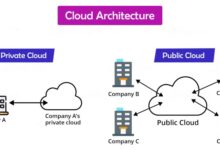
Embrace a secure cloud journey, ensuring the resilience and integrity of your digital ecosystem.
Cloud Architecture Security Overview
In the modern IT landscape, cloud computing has revolutionized the way organizations store, process, and access data and applications. Cloud architecture security plays a crucial role in safeguarding these cloud-based systems and data from various threats and vulnerabilities.
The unique characteristics of cloud computing, such as shared responsibility models and distributed data, pose distinct security challenges. Understanding these challenges is essential for implementing effective security measures in cloud environments.
Shared Responsibility Model
In cloud computing, the responsibility for security is shared between the cloud service provider and the customer. The provider is responsible for securing the underlying infrastructure, while the customer is responsible for securing their data and applications. This shared responsibility model requires clear communication and collaboration between both parties to ensure comprehensive security.
Distributed Data
Cloud computing often involves distributed data storage and processing across multiple servers and locations. This distributed nature of data increases the attack surface and makes it challenging to maintain consistent security controls. Organizations need to implement robust data encryption and access control mechanisms to protect data in transit and at rest.
Security Best Practices for Cloud Architecture
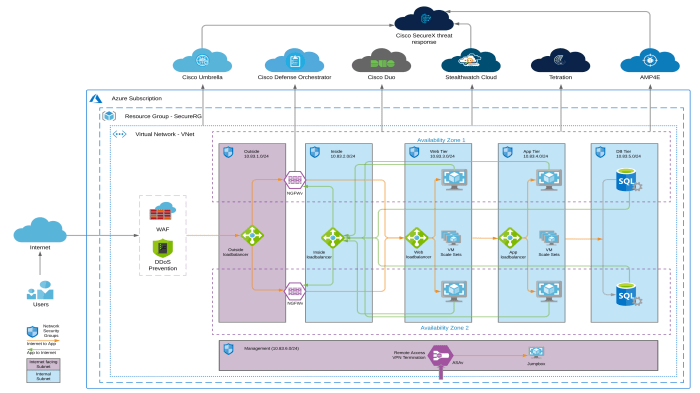
Implementing robust security measures is essential for safeguarding cloud-based systems and data. By adhering to a comprehensive set of best practices, organizations can effectively protect their cloud environments against potential threats and vulnerabilities.
Access Control
Establish rigorous access control mechanisms to regulate who can access cloud resources and services. Implement role-based access control (RBAC) to assign permissions based on job roles and responsibilities, ensuring that users only have access to the resources they need to perform their duties.
- Use multi-factor authentication (MFA) to add an extra layer of security by requiring users to provide multiple forms of identification, such as a password and a one-time code sent to their mobile device.
- Regularly review and update user permissions to ensure they are still appropriate and aligned with changing roles and responsibilities.
Data Encryption
Encrypt data both at rest and in transit to protect it from unauthorized access and interception. Utilize encryption technologies like AES-256 to safeguard data stored in cloud storage services and employ SSL/TLS protocols to secure data transmission over networks.
- Implement encryption keys management best practices, including secure key generation, storage, and rotation.
- Consider using tokenization or other data masking techniques to protect sensitive data in transit or storage.
Network Security
Configure network security measures to protect cloud resources from unauthorized access and malicious traffic. Implement firewalls, intrusion detection systems (IDS), and intrusion prevention systems (IPS) to monitor and block suspicious network activity.
- Segment your cloud network into multiple virtual networks to limit the spread of a security breach and contain its impact.
- Use network access control lists (ACLs) to restrict access to specific network resources based on IP addresses or other criteria.
Incident Response
Develop a comprehensive incident response plan to guide your organization’s response to security incidents. The plan should include steps for detecting, investigating, and responding to security breaches, as well as procedures for communicating with affected parties and restoring normal operations.
- Regularly test your incident response plan to ensure it is effective and up-to-date.
- Conduct security awareness training for your employees to educate them about potential threats and best practices for protecting cloud resources.
Shared Responsibility Model in Cloud Security
The shared responsibility model in cloud computing defines the respective roles and obligations of cloud providers and customers in maintaining the security of cloud-based systems and data. This model recognizes that cloud security is a collaborative effort between these two parties.
Cloud Providers’ Responsibilities:
- Infrastructure Security: Cloud providers are responsible for securing the underlying infrastructure, including hardware, networks, and data centers, as well as implementing physical and virtual security measures to protect against unauthorized access, data breaches, and other threats.
- Platform Security: Cloud providers manage and secure the cloud platform itself, including operating systems, virtualization technologies, and other underlying components. They are responsible for ensuring the security of the platform against vulnerabilities, malware, and unauthorized access.
- Compliance and Regulatory Requirements: Cloud providers must adhere to relevant industry standards, regulations, and compliance requirements, such as ISO 27001, SOC 2, and HIPAA, to ensure the security and privacy of customer data.
Customers’ Responsibilities:
- Data Security: Customers are responsible for protecting the security of their data stored in the cloud. This includes implementing appropriate encryption measures, access controls, and data backup and recovery strategies.
- Application Security: Customers are responsible for securing their applications and workloads deployed on the cloud platform. This includes implementing security controls such as authentication, authorization, and input validation to prevent vulnerabilities and unauthorized access.
- Compliance and Regulatory Requirements: Customers are responsible for ensuring that their use of cloud services complies with relevant industry standards, regulations, and compliance requirements applicable to their organization.
Impact on Security Decision-Making and Resource Allocation:
The shared responsibility model has a significant impact on security decision-making and resource allocation within organizations:
- Cost Optimization: By leveraging the security measures provided by cloud providers, customers can optimize their security investments and focus resources on securing their applications and data, rather than investing heavily in infrastructure security.
- Enhanced Security: The shared responsibility model encourages collaboration between cloud providers and customers, leading to enhanced security outcomes. Cloud providers can provide expertise and resources that customers may not have, while customers can contribute their knowledge of their specific business requirements and security needs.
- Regulatory Compliance: The shared responsibility model helps organizations meet regulatory compliance requirements by providing a clear division of responsibilities and ensuring that both cloud providers and customers are accountable for their respective security obligations.
Securing Data in the Cloud
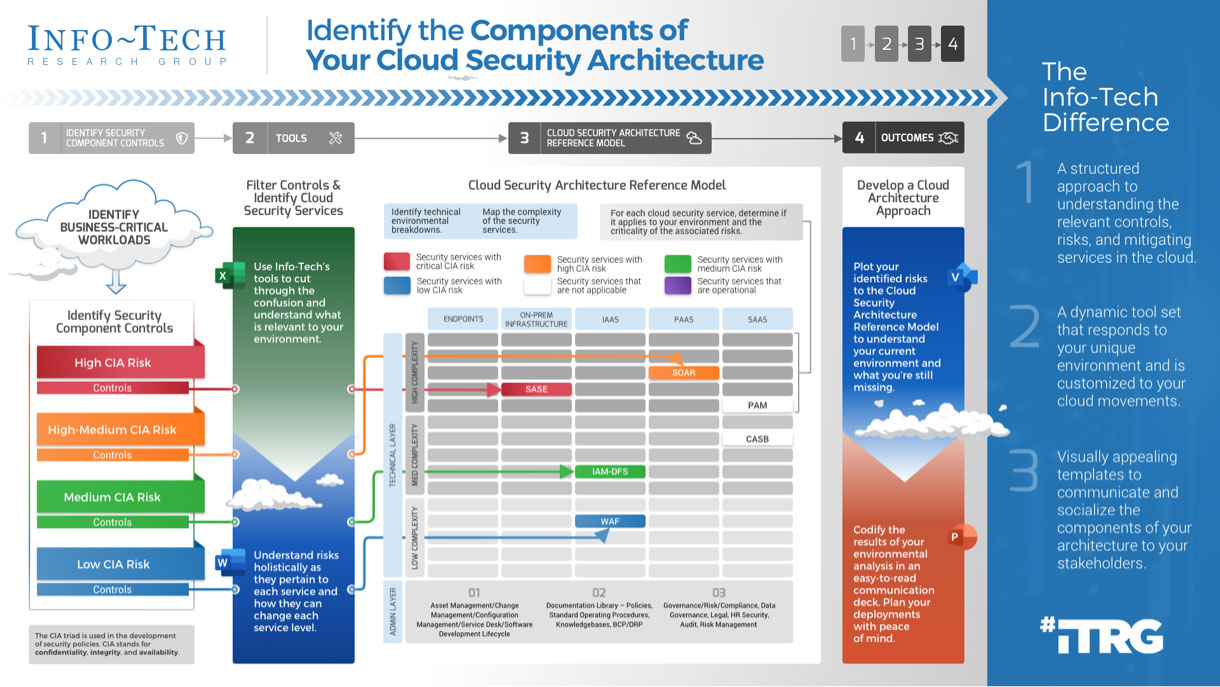
Protecting sensitive data stored in the cloud is paramount in ensuring the integrity, confidentiality, and availability of information. Various methods are available to safeguard data in the cloud, each offering unique advantages and considerations.
Encryption
Encryption is a fundamental data security technique that involves converting data into an unreadable format using an encryption key. This ensures that unauthorized individuals cannot access or comprehend the data even if they gain possession of it. Encryption can be applied at different levels, including:
- Data at Rest: Encrypted while stored on cloud servers, protecting it from unauthorized access.
- Data in Transit: Encrypted during transmission between cloud servers or between cloud and on-premises systems, preventing interception.
- Data in Use: Encrypted while being processed or manipulated in memory, minimizing the risk of exposure.
The strength of encryption is determined by the encryption algorithm used and the length of the encryption key. Common encryption algorithms include AES (Advanced Encryption Standard) and RSA (Rivest-Shamir-Adleman). Longer encryption keys provide stronger protection but may impact performance.
Tokenization
Tokenization is a data security measure that replaces sensitive data with unique identifiers called tokens. These tokens are generated using a tokenization algorithm and are meaningless to anyone without the corresponding decryption key. Tokenization is often used to protect sensitive data such as credit card numbers, social security numbers, and health records.
- Advantages: Tokenization reduces the risk of data breaches by eliminating the need to store sensitive data in plaintext. It also simplifies compliance with data protection regulations, as tokens are not considered personal data.
- Disadvantages: Tokenization can introduce additional complexity and overhead to systems, and it requires robust key management practices to ensure the security of tokens.
Access Control Mechanisms
Access control mechanisms are essential for regulating who can access data in the cloud and what actions they can perform on that data. Common access control mechanisms include:
- Role-Based Access Control (RBAC): RBAC assigns permissions to users based on their roles within an organization. This allows organizations to define fine-grained access controls and limit user access to only the data and resources they need to perform their job functions.
- Attribute-Based Access Control (ABAC): ABAC grants access to data based on attributes associated with users, resources, and actions. This allows organizations to create more flexible and dynamic access control policies.
- Multi-Factor Authentication (MFA): MFA requires users to provide multiple forms of authentication, such as a password and a one-time code sent to their mobile device, to access data. This adds an extra layer of security and makes it more difficult for unauthorized individuals to gain access.
Network Security in Cloud Architecture
Network security in cloud environments encompasses a comprehensive range of measures and technologies deployed to protect the integrity, confidentiality, and availability of data, applications, and resources communicated over cloud networks.
Securing cloud networks involves implementing a combination of security controls, including firewalls, intrusion detection systems (IDS), and virtual private networks (VPNs), among others.
Securing Cloud Networks
To ensure robust network security in cloud environments, organizations should adopt a multi-layered approach, incorporating a combination of security controls and best practices.
- Firewalls: Deploy firewalls to monitor and control incoming and outgoing network traffic, enforcing security policies and preventing unauthorized access.
- Intrusion Detection Systems (IDS): Implement IDS to continuously monitor network traffic for suspicious activities, identifying and alerting security teams to potential threats.
- Virtual Private Networks (VPNs): Utilize VPNs to establish secure, encrypted connections between remote users and cloud resources, ensuring data privacy and integrity during transmission.
- Network Segmentation: Divide the cloud network into isolated segments, limiting the impact of security breaches and preventing lateral movement of threats.
- Security Information and Event Management (SIEM): Implement a SIEM solution to collect, analyze, and correlate security-related events from various sources, providing centralized visibility and enabling prompt incident response.
Additionally, organizations should regularly monitor and update network security controls, staying abreast of emerging threats and adapting their security posture accordingly.
Sample Network Diagram
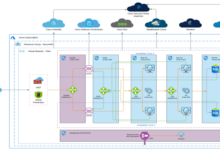
The following diagram illustrates a secure cloud network architecture, incorporating various security controls and best practices:
[Insert a sample network diagram here, illustrating the deployment of firewalls, IDS, VPNs, network segmentation, and SIEM.]
This diagram demonstrates how these security controls work together to protect cloud networks, ensuring the confidentiality, integrity, and availability of data and resources.
Identity and Access Management (IAM) in Cloud Security
Identity and Access Management (IAM) is a crucial component of cloud security that regulates access to cloud resources. It enables organizations to control who can access what, when, and how within their cloud environments. IAM is essential for protecting sensitive data, applications, and infrastructure from unauthorized access, ensuring compliance with regulatory requirements, and maintaining overall security posture.
IAM Models
There are several IAM models that organizations can adopt based on their specific requirements. Two common models are:
- Role-Based Access Control (RBAC):
RBAC assigns permissions to users and groups based on their roles within an organization. This model simplifies access management by defining a set of predefined roles with associated permissions. For example, a “System Administrator” role may have permissions to manage all system resources, while a “User” role may have limited access to specific applications. - Attribute-Based Access Control (ABAC):
ABAC is a more fine-grained access control model that allows organizations to define access policies based on attributes such as user identity, device type, location, and time of day. This model provides greater flexibility and customization compared to RBAC, enabling organizations to implement more granular access controls. For instance, ABAC can be used to restrict access to sensitive data only from specific devices or during certain hours.
IAM Implementation
IAM is typically implemented using a centralized identity management system, such as a cloud identity provider or an on-premises directory service. This system manages user accounts, groups, and roles, and enforces access policies across cloud resources.
IAM can be used to control access to a wide range of cloud resources, including:
- User accounts: IAM allows organizations to create and manage user accounts, assign roles, and enforce password policies.
- Applications: IAM can be used to control access to cloud applications, both internally developed and third-party applications.
- Data: IAM can be used to control access to data stored in cloud storage services, such as object storage and databases.
- Infrastructure: IAM can be used to control access to cloud infrastructure resources, such as virtual machines, networks, and load balancers.
IAM Best Practices
To ensure effective IAM implementation, organizations should follow these best practices:
- Principle of Least Privilege: Grant users only the minimum level of access necessary to perform their job functions.
- Regularly Review and Update Access Permissions: Periodically review and update access permissions to ensure they are still appropriate and aligned with business needs.
- Use Strong Authentication Mechanisms: Implement strong authentication mechanisms, such as multi-factor authentication (MFA), to protect user accounts from unauthorized access.
- Monitor and Audit IAM Activity: Monitor and audit IAM activity to detect suspicious or anomalous behavior, such as unauthorized access attempts.
Cloud Security Compliance and Regulations
Organizations that adopt cloud computing must adhere to various security compliance standards and regulations to ensure the protection of sensitive data and maintain a secure cloud environment. These standards and regulations provide guidelines and requirements for cloud security, helping organizations demonstrate their commitment to data protection and compliance.
Key Security Compliance Standards and Regulations
Numerous security compliance standards and regulations are relevant to cloud architecture, including:
- ISO 27001: An international standard that provides a framework for information security management systems (ISMS).
- HIPAA: The Health Insurance Portability and Accountability Act of 1996, which protects the privacy and security of health information.
- GDPR: The General Data Protection Regulation, a European Union regulation that protects the personal data of individuals.
- PCI DSS: The Payment Card Industry Data Security Standard, which protects sensitive cardholder data.
- SOC 2: The Service Organization Control 2, which provides assurance that a service organization has implemented effective controls to protect customer data.
Importance of Adhering to Security Standards and Regulations
Adhering to security compliance standards and regulations is crucial for several reasons:
- Legal Compliance: Organizations must comply with applicable laws and regulations to avoid legal penalties and reputational damage.
- Data Protection: Compliance helps protect sensitive data from unauthorized access, use, or disclosure.
- Customer Trust: Demonstrating compliance builds trust among customers and stakeholders, enhancing the organization’s reputation.
- Competitive Advantage: Compliance can provide a competitive advantage by differentiating an organization from its competitors.
Checklist for Achieving Compliance with Cloud Security Standards
Organizations can take the following steps to achieve compliance with cloud security standards:
- Identify Applicable Standards and Regulations: Determine which standards and regulations apply to the organization and its cloud environment.
- Conduct a Risk Assessment: Assess the security risks associated with the cloud environment and identify areas where compliance is needed.
- Develop a Compliance Plan: Create a plan that Artikels the steps required to achieve compliance with the identified standards and regulations.
- Implement Security Controls: Implement appropriate security controls to mitigate identified risks and ensure compliance.
- Monitor and Review Compliance: Continuously monitor compliance with security standards and regulations and review the effectiveness of implemented controls.
By following these steps, organizations can effectively manage cloud security compliance and maintain a secure cloud environment.
Cloud Security Monitoring and Incident Response
Continuous monitoring and incident response are crucial aspects of cloud security, enabling organizations to proactively detect, respond to, and mitigate security threats and incidents.Effective cloud security monitoring involves collecting and analyzing security-related data from various sources, such as logs, network traffic, and system configurations, to identify potential security issues and suspicious activities.
Security information and event management (SIEM) tools play a vital role in aggregating, correlating, and analyzing security data from multiple sources, providing a comprehensive view of the security posture of the cloud environment. Vulnerability scanning is another essential technique for identifying and addressing security vulnerabilities in cloud infrastructure, applications, and software components.
Security Monitoring and Incident Response Plan
A well-defined cloud security monitoring and incident response plan Artikels the roles, responsibilities, and procedures for detecting, investigating, and responding to security incidents in the cloud. The plan should include:
- Clearly defined roles and responsibilities for incident response, including incident responders, security analysts, and IT personnel.
- Established communication channels and protocols for reporting and escalating security incidents.
- A process for triage and prioritization of security incidents based on their severity and potential impact.
- Guidelines for conducting thorough incident investigations, including evidence collection, analysis, and root cause identification.
- Procedures for containment, eradication, and recovery actions to mitigate the impact of security incidents.
- Regular testing and review of the incident response plan to ensure its effectiveness and alignment with evolving security threats.
Last Point
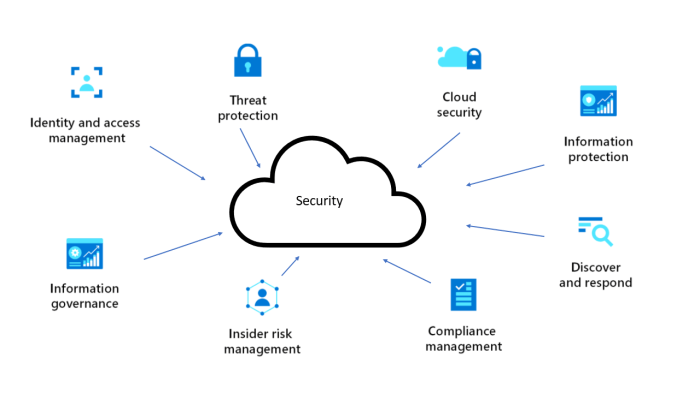
Cloud architecture security stands as a cornerstone of modern IT environments, demanding a proactive and comprehensive approach to safeguard data, maintain compliance, and ensure business continuity. By implementing robust security measures, organizations can harness the transformative power of cloud computing with confidence, driving innovation and achieving business success in a secure and compliant manner.