In the vast expanse of the digital realm, two distinct cloud computing paradigms reign supreme: public clouds and private clouds. Each, like celestial bodies in their own right, offers unique characteristics, advantages, and challenges. Embark on a journey to explore the intricacies of these cloud ecosystems, unraveling their profound impact on businesses and shaping the future of digital transformation.
As organizations venture into the uncharted territories of cloud computing, understanding the nuances of public and private clouds becomes paramount. This comprehensive analysis delves into the core concepts, security considerations, cost implications, performance metrics, and management paradigms that define these cloud realms.
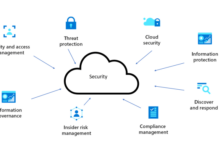
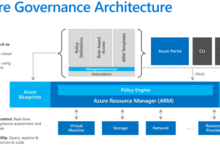

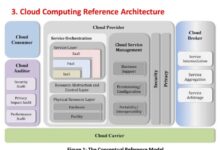
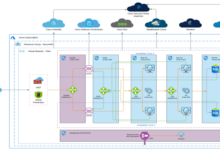
Discover the intricacies of data control, scalability, reliability, and innovation that shape the landscape of cloud adoption.
Introduction
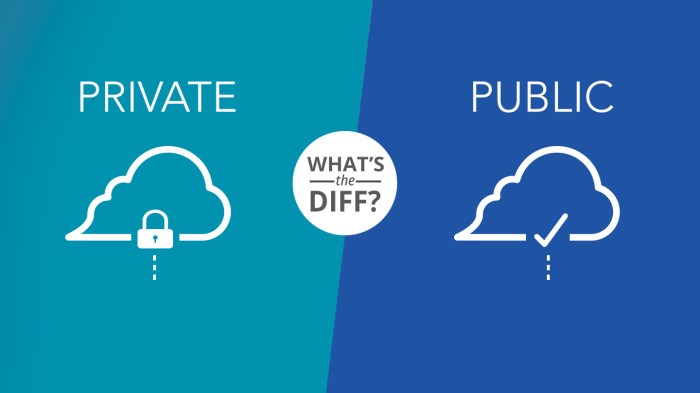
Cloud computing has revolutionized the way businesses and individuals store, manage, and process data. The concept of public and private clouds has emerged as a prominent aspect of cloud computing, each offering unique advantages and considerations.
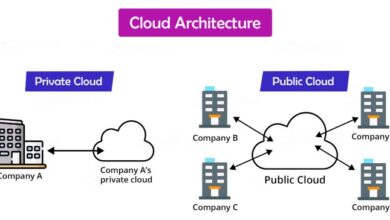
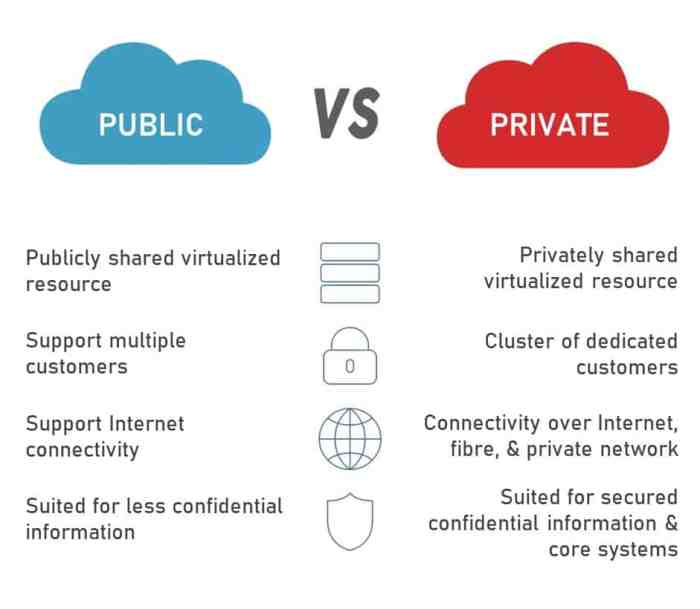
Public clouds are offered by third-party service providers, allowing users to access and utilize computing resources such as storage, processing power, and applications over the internet on a pay-as-you-go basis. Private clouds, on the other hand, are owned and managed by a single organization or entity, providing exclusive access to resources within a secure, dedicated environment.
Benefits of Public Clouds
- Cost-effectiveness: Public clouds offer a cost-efficient solution, as users only pay for the resources they consume, eliminating the need for upfront investments in infrastructure.
- Scalability: Public clouds provide the flexibility to scale resources up or down quickly and easily, adapting to changing business needs and demands.
- Reliability: Public cloud providers invest heavily in maintaining robust infrastructure and redundant systems, ensuring high availability and reliability.
- Convenience: Public clouds offer ease of use and accessibility, allowing users to access and manage resources from anywhere with an internet connection.
Drawbacks of Public Clouds
- Security concerns: Public clouds share resources among multiple users, raising security concerns regarding data privacy and protection.
- Limited control: Users have limited control over the underlying infrastructure and configurations in public clouds, which may not align with specific requirements.
- Performance variability: Public clouds may experience fluctuations in performance due to shared resources and network congestion, impacting application responsiveness.
- Vendor lock-in: Relying on a single public cloud provider can lead to vendor lock-in, limiting the ability to switch providers without significant effort and cost.
Benefits of Private Clouds
- Security and control: Private clouds offer greater control over security and data privacy, as resources are dedicated to a single organization.
- Customization: Private clouds allow organizations to customize and configure resources according to their specific needs and requirements.
- Performance optimization: Private clouds provide dedicated resources, ensuring consistent and predictable performance for critical applications.
- Compliance: Private clouds facilitate compliance with regulatory requirements and industry standards, as organizations have direct control over the infrastructure.
Drawbacks of Private Clouds
- High cost: Private clouds require significant upfront investments in infrastructure, hardware, and maintenance, making them more expensive than public clouds.
- Scalability limitations: Private clouds may have limited scalability compared to public clouds, as resources are physically constrained within the organization’s infrastructure.
- Management complexity: Managing a private cloud requires specialized expertise and resources, which can be challenging for organizations without the necessary technical capabilities.
- Lack of flexibility: Private clouds offer less flexibility compared to public clouds, as resources are dedicated and cannot be easily reallocated or shared among different projects or applications.
Security and Compliance
When it comes to securing and managing data, public and private clouds offer distinct approaches with unique advantages and challenges.
Security Measures and Compliance Standards
Public clouds typically provide robust security features and adhere to stringent compliance standards. These measures include encryption, authentication, authorization, access control, and regular security audits. Compliance with industry-specific regulations, such as HIPAA, PCI-DSS, and ISO 27001, is often a key consideration for organizations.
Private clouds offer greater control over security configurations, enabling organizations to tailor their security measures to meet specific requirements. However, the responsibility for maintaining and managing these security controls falls solely on the organization, requiring dedicated resources and expertise.
Shared Responsibility Model
In public clouds, the shared responsibility model defines the division of responsibilities between the cloud provider and the customer. The provider is responsible for securing the cloud infrastructure, while the customer is responsible for securing the data and applications deployed on the platform.
This model can impact security as the customer’s responsibility extends to managing access control, data encryption, and application security. Failure to adequately secure these aspects can expose data to vulnerabilities and compromise overall security.
Data Control and Customization
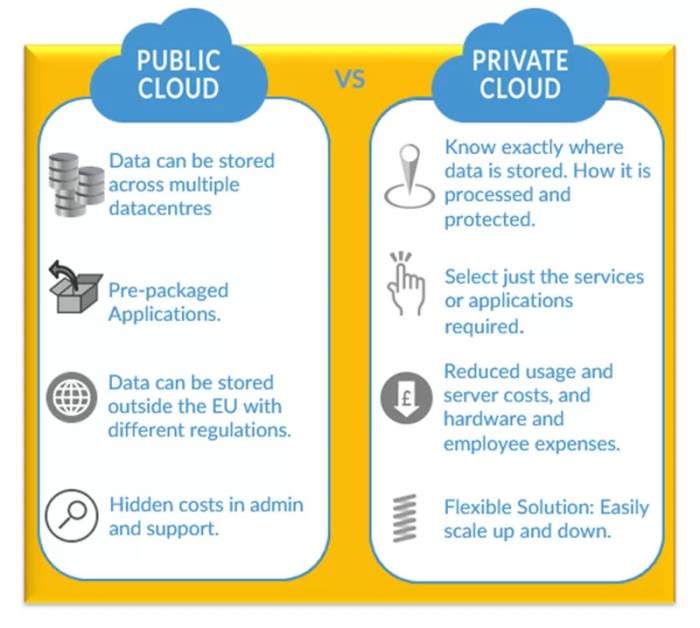
Private clouds provide organizations with complete control over data location, security, and customization. This level of control allows organizations to tailor their cloud environment to meet specific compliance and regulatory requirements.
However, the trade-off is the increased complexity and cost associated with managing and maintaining a private cloud infrastructure. Organizations need to invest in dedicated resources, expertise, and ongoing maintenance to ensure the security and performance of their private cloud.
Cost and Scalability
Understanding the financial implications and scalability aspects of public and private clouds is crucial for organizations to make informed decisions. Let’s explore these factors in detail.
Cost Models and Pricing Structures
Public cloud services typically follow a pay-as-you-go model, where users are charged based on their usage of resources such as compute, storage, and network bandwidth. This model offers flexibility and cost-effectiveness, as organizations only pay for what they use. Private clouds, on the other hand, require upfront investments in infrastructure and ongoing maintenance costs, which can be substantial.
However, organizations have more control over their costs and can potentially achieve economies of scale in the long run.
Elasticity
Elasticity is a key feature of cloud computing that allows resources to be scaled up or down quickly and easily to meet changing demands. This flexibility enables organizations to optimize their resource allocation and avoid overprovisioning or underprovisioning, leading to cost savings and improved performance.
Public clouds typically offer better elasticity than private clouds, as they have vast pools of resources that can be allocated on demand.
Scalability and Cost Optimization
The scalability of cloud platforms plays a crucial role in cost optimization. With public clouds, organizations can scale their resources seamlessly to handle peak loads or sudden spikes in demand, without the need for additional hardware or infrastructure. This elasticity helps avoid overprovisioning, resulting in cost savings.
Private clouds, while offering less elasticity, can still provide cost optimization benefits through efficient resource management and capacity planning.
Performance and Reliability
Performance and reliability are critical aspects to consider when selecting a cloud environment. Several factors influence these attributes, including the underlying infrastructure, network connectivity, and data management practices.
Applications or industries that rely on real-time processing, high-frequency trading, or scientific simulations demand exceptional performance and reliability. These applications are sensitive to network latency, uptime guarantees, and data redundancy.
Network Latency
Network latency, the time it takes for data to travel from one point to another, can significantly impact application performance. Public clouds typically have a more extensive geographic distribution than private clouds, which can introduce additional latency. However, public cloud providers often deploy edge computing solutions to reduce latency by placing data centers closer to users.
Uptime Guarantees
Uptime guarantees are service level agreements (SLAs) that cloud providers offer, ensuring a certain level of availability for their services. Private clouds typically offer higher uptime guarantees since they are dedicated to a single organization and have more control over the infrastructure.
However, public cloud providers have made significant investments in infrastructure and redundancy, leading to improved uptime guarantees comparable to private clouds.
Data Redundancy
Data redundancy is a critical factor in ensuring data availability and reliability. Public cloud providers typically offer various data redundancy options, including replication across multiple data centers and backup services. Private clouds can also implement data redundancy, but the level of redundancy may be limited by the organization’s resources and expertise.
Management and Control
In the realm of cloud computing, management and control over IT infrastructure is a crucial aspect that organizations must carefully consider when choosing between public and private clouds.
Public clouds, offered by cloud service providers (CSPs) like Amazon Web Services (AWS), Microsoft Azure, and Google Cloud Platform, provide organizations with a shared infrastructure, where multiple tenants coexist. In this model, the CSP is responsible for managing and maintaining the underlying infrastructure, including hardware, software, and networking, while organizations retain control over their applications and data.
CSP Responsibilities in Public Clouds
- Infrastructure Management: CSPs handle the day-to-day operations and maintenance of the underlying infrastructure, ensuring its reliability, security, and performance.
- Software Updates and Patching: CSPs are responsible for applying software updates, patches, and security fixes to the infrastructure, ensuring that the latest and most secure versions of software are always running.
- Security and Compliance: CSPs implement security measures and adhere to industry standards and regulations to protect customer data and ensure compliance with various regulatory requirements.
- Billing and Customer Support: CSPs manage billing and provide customer support to organizations using their cloud services, addressing any technical issues or inquiries.
Managing and Controlling Private Clouds In-house
In contrast to public clouds, private clouds are owned and operated by a single organization. This means that the organization has complete control over the entire IT infrastructure, including hardware, software, and networking. While this offers greater flexibility and customization, it also brings additional responsibilities for managing and maintaining the cloud environment.
- Infrastructure Setup and Maintenance: Organizations must procure and set up the necessary hardware, software, and networking components, and ensure their proper maintenance and upkeep.
- Security and Compliance: Organizations are solely responsible for implementing security measures and ensuring compliance with regulatory requirements, as CSPs do not provide these services in private clouds.
- Staffing and Expertise: Organizations need to hire and train qualified IT staff with expertise in cloud management, security, and operations to effectively manage and maintain their private clouds.
Use Cases and Applications
Public clouds are commonly used by organizations of all sizes for various applications, including:
- Web Hosting: Public clouds provide scalable and reliable platforms for hosting websites and applications, ensuring high availability and performance.
- Data Storage and Backup: Public clouds offer cost-effective and secure solutions for storing and backing up large amounts of data, enabling easy access and retrieval.
- Software as a Service (SaaS): Many software applications are now delivered through public clouds, providing users with subscription-based access to software without the need for installation or maintenance.
- Platform as a Service (PaaS): Public clouds offer PaaS platforms that enable developers to build, test, and deploy applications quickly and easily, reducing development time and costs.
- Infrastructure as a Service (IaaS): Public clouds provide IaaS platforms that allow organizations to rent computing resources such as servers, storage, and networking, enabling them to scale their IT infrastructure as needed.
On the other hand, private clouds are often preferred in situations where organizations require:
- High Security and Compliance: Private clouds offer greater control over security and compliance, making them suitable for organizations handling sensitive data or operating in highly regulated industries.
- Predictable Performance: Private clouds provide dedicated resources, ensuring consistent and predictable performance for applications that require low latency and high throughput.
- Customization and Control: Private clouds allow organizations to customize their infrastructure and applications to meet specific requirements, providing greater flexibility and control over their IT environment.
The suitability of public or private clouds for different industries and applications depends on various factors, including:
- Industry Regulations: Some industries, such as healthcare and finance, have strict regulations that require organizations to maintain control over their data and infrastructure, making private clouds a preferred choice.
- Data Sensitivity: Organizations handling sensitive data, such as customer information or financial records, may opt for private clouds to ensure the highest levels of security and compliance.
- Performance Requirements: Applications that require consistent and predictable performance, such as real-time data processing or high-frequency trading, are often better suited for private clouds.
- Scalability Needs: Organizations with rapidly changing IT requirements may prefer public clouds for their scalability and flexibility, allowing them to scale up or down resources as needed.
In summary, the choice between public and private clouds depends on the specific requirements of the organization, including security, performance, compliance, scalability, and customization needs.
Future Trends and Innovations
The future of public and private clouds is shaped by emerging trends and innovations that enhance their capabilities and drive broader adoption. Artificial intelligence (AI) and machine learning (ML) play a pivotal role in optimizing resource allocation, improving security, and enabling intelligent automation within cloud environments.
Role of AI and ML in Cloud Computing
AI and ML technologies are revolutionizing cloud computing by:
- Automated Resource Management: AI algorithms analyze usage patterns and workload demands, dynamically adjusting resource allocation to optimize performance and cost-efficiency.
- Enhanced Security: ML-driven security solutions detect and respond to threats in real-time, improving cloud security posture and protecting sensitive data.
- Intelligent Automation: AI-powered tools automate repetitive tasks, such as provisioning, configuration, and maintenance, reducing operational overhead and increasing agility.
Summary
The dynamic interplay between public and private clouds continues to reshape the digital landscape, presenting organizations with a spectrum of choices. As technology evolves, hybrid cloud models and emerging innovations, such as artificial intelligence and edge computing, further redefine the boundaries of cloud utilization.
The journey to harness the full potential of cloud computing lies in understanding the unique requirements of each organization, aligning them with the strengths and limitations of these cloud paradigms. Embrace the transformative power of the cloud, navigate the complexities with informed decisions, and soar to new heights of digital success.