In the ever-evolving realm of cloud computing, the foundation of every successful cloud solution lies in the principles that govern its architecture. These principles serve as the guiding compass, ensuring effectiveness, scalability, and resilience in the vast digital landscape. Embark on a journey to explore the intricacies of cloud architecture design principles, delving into the strategies that empower businesses to navigate the complexities of the cloud with confidence and innovation.
From elasticity and scalability to fault tolerance and security, each principle plays a pivotal role in shaping the cloud architecture landscape. Discover how these principles orchestrate seamless performance, unwavering availability, and unwavering data protection, enabling organizations to unlock the full potential of cloud computing.

Design Principles for Cloud Architecture
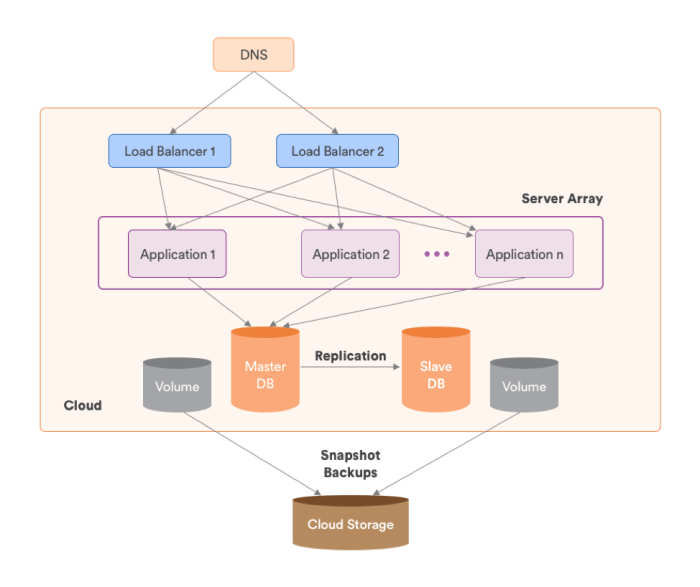
Cloud architecture design is guided by fundamental principles that ensure effective and scalable solutions. These principles provide a solid foundation for architects to create robust, reliable, and flexible cloud systems.
Principle of Scalability
Scalability is paramount in cloud architecture, enabling systems to seamlessly handle varying workloads and demands. This principle involves designing systems that can scale up or down resources (such as compute, storage, and network) as needed. It ensures optimal performance and cost-effectiveness by dynamically adjusting resources to match changing requirements.
Elasticity and Scalability
In cloud architecture, elasticity refers to the ability of a system to adapt its resource allocation based on changing demands. It allows cloud-based applications and services to scale up or down automatically, optimizing resource utilization and cost-effectiveness.
Scalability, on the other hand, is the ability of a system to handle increased or decreased workloads without compromising performance. Cloud environments enable both vertical and horizontal scaling, providing flexibility and efficiency in resource management.
Vertical Scaling
Vertical scaling, also known as scaling up, involves adding more resources to an existing instance or server. This can include increasing CPU cores, memory, or storage capacity. Vertical scaling is suitable for applications that require more resources for improved performance or to handle sudden spikes in demand.
Horizontal Scaling
Horizontal scaling, also known as scaling out, involves adding more instances or servers to distribute the workload. This approach is often used for applications that experience fluctuating demand or require high availability and redundancy. Horizontal scaling allows for greater flexibility and fault tolerance, as the load is distributed across multiple instances.
Examples of Elasticity and Scalability in Cloud Services
Many cloud providers offer services that exemplify elasticity and scalability. Some notable examples include:
- Amazon Web Services (AWS) Auto Scaling: AWS Auto Scaling allows users to set policies for scaling up or down based on various metrics such as CPU utilization, memory usage, or custom metrics. It enables automatic adjustment of resource allocation to meet changing demands.
- Google Cloud Platform (GCP) Cloud Run: GCP Cloud Run is a fully managed serverless platform that automatically scales instances based on traffic volume. It eliminates the need for manual capacity planning and allows developers to focus on application development rather than infrastructure management.
- Microsoft Azure App Service: Azure App Service offers auto-scaling capabilities, enabling applications to scale up or down based on predefined rules or triggers. It provides flexibility and cost-effectiveness by optimizing resource usage.
Fault Tolerance and High Availability
In the realm of cloud architecture, fault tolerance and high availability are indispensable pillars of reliability and resilience. Fault tolerance refers to the ability of a system to withstand and recover from component failures, ensuring uninterrupted service. High availability takes this a step further, guaranteeing near-constant uptime and minimal disruption to users.
Redundancy: The Cornerstone of Fault Tolerance
Cloud platforms embrace redundancy as a fundamental strategy for achieving fault tolerance. Redundancy involves duplicating critical components, such as servers, storage systems, and network links, to create backups that can seamlessly take over in the event of a failure. This ensures that even if one component fails, the overall system remains operational.
Load Balancing: Distributing the Load
Load balancing plays a pivotal role in enhancing fault tolerance and high availability by distributing traffic across multiple servers or resources. This strategy prevents overloading any single component and ensures that resources are utilized efficiently. By spreading the load, cloud platforms can mitigate the impact of failures and maintain consistent performance.
Failover Mechanisms: Seamless Switchover
Failover mechanisms are essential for orchestrating the seamless transition from a failed component to a healthy backup. These mechanisms continuously monitor the health of system components and automatically initiate the failover process when a failure is detected. This ensures that applications and services remain available with minimal downtime or disruption to users.
Case Study: Amazon Web Services (AWS)
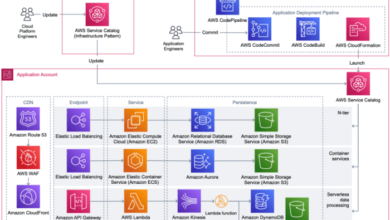
Amazon Web Services (AWS), a leading cloud platform provider, exemplifies the implementation of fault tolerance and high availability. AWS employs a multi-layered approach that encompasses redundancy, load balancing, and failover mechanisms. This comprehensive strategy has enabled AWS to achieve industry-leading uptime and reliability, making it a trusted choice for businesses seeking resilient cloud solutions.
Security and Compliance
Ensuring the security and compliance of cloud architectures is paramount in today’s digital landscape. Cloud providers implement robust security measures and adhere to regulatory standards to protect data and maintain compliance.
Security considerations encompass various aspects:
- Encryption: Data encryption at rest and in transit safeguards sensitive information from unauthorized access.
- Access Control: Granular access controls, such as role-based access control (RBAC), restrict user privileges to specific resources.
- Identity and Access Management (IAM): Centralized IAM systems manage user identities, access permissions, and authentication processes.
- Vulnerability Management: Regular security audits and patch management help mitigate vulnerabilities and reduce the risk of cyber threats.
- Disaster Recovery and Business Continuity: Cloud providers offer disaster recovery services to ensure data and applications remain accessible in the event of outages.
Compliance with industry regulations and standards is also crucial. Cloud providers undergo rigorous audits and certifications to demonstrate their adherence to these standards.
Regulatory Compliance
Cloud providers must comply with various regulatory frameworks, including:
- General Data Protection Regulation (GDPR): GDPR ensures the protection of personal data within the European Union.
- Health Insurance Portability and Accountability Act (HIPAA): HIPAA regulates the handling of protected health information in the United States.
- Payment Card Industry Data Security Standard (PCI DSS): PCI DSS sets standards for securing credit card data.
By adhering to these regulations, cloud providers demonstrate their commitment to data protection and privacy.
Recommendations for Secure Cloud Architectures
- Shared Responsibility Model: Understand the shared responsibility model, where cloud providers handle infrastructure security, while customers are responsible for data and application security.
- Secure Cloud Architecture Design: Design cloud architectures with security in mind, considering aspects like network segmentation, firewall configurations, and secure data storage.
- Regular Security Audits: Conduct regular security audits to identify and address vulnerabilities.
- Implement Multi-Factor Authentication (MFA): MFA adds an extra layer of security by requiring multiple forms of authentication.
- Encrypt Data at Rest and in Transit: Encryption ensures data remains protected even if intercepted.
- Monitor and Log Activity: Implement monitoring and logging solutions to detect suspicious activities and respond promptly.
- Train Employees on Security Best Practices: Educate employees about security risks and best practices to prevent human errors.
By following these recommendations, organizations can enhance the security and compliance of their cloud architectures, reducing the risk of data breaches and ensuring regulatory compliance.
Cost Optimization
Optimizing costs in cloud architecture design involves employing strategies to reduce and control cloud expenses while ensuring performance and scalability. Implementing cost-effective measures can enhance the overall efficiency and ROI of cloud-based solutions.
Cloud Cost Management Tools and Techniques
Leveraging cloud cost management tools and techniques is crucial for effective cost optimization. These tools provide insights into cloud usage, identify cost-saving opportunities, and enable automated cost controls. Techniques such as rightsizing resources, utilizing reserved instances, and optimizing storage utilization can significantly reduce cloud costs.
Tips and Best Practices for Cost-Effective Cloud Architecture Design
Implementing the following tips and best practices can help achieve cost-effective cloud architecture design:
- Choose the Right Cloud Service Model: Select the appropriate cloud service model (IaaS, PaaS, or SaaS) based on specific requirements and workloads. SaaS offers the lowest cost, followed by PaaS and IaaS.
- Utilize Cloud Cost Management Tools: Employ cloud cost management tools to gain visibility into cloud usage, identify cost-saving opportunities, and implement automated cost controls.
- Rightsize Resources: Ensure that cloud resources, such as compute instances and storage, are appropriately sized to match actual needs. Avoid overprovisioning to prevent unnecessary costs.
- Optimize Storage Utilization: Implement data compression, deduplication, and tiering techniques to optimize storage utilization and reduce storage costs.
- Utilize Reserved Instances: Purchase reserved instances for predictable workloads to secure discounted rates and save costs compared to on-demand pricing.
- Implement Autoscaling: Use autoscaling mechanisms to automatically adjust resource allocation based on demand, ensuring that resources are used efficiently and costs are minimized during low-usage periods.
- Monitor and Analyze Cloud Usage: Continuously monitor and analyze cloud usage patterns to identify trends and potential areas for cost optimization.
Performance and Optimization
In the realm of cloud architecture, performance and optimization reign supreme. They are the cornerstones of a cloud system that delivers seamless experiences, ensuring applications and services operate at peak efficiency. Various factors influence the performance of a cloud architecture, including:
- Resource Provisioning: Optimal allocation of resources like CPU, memory, and storage to meet application demands.
- Network Connectivity: The speed and reliability of the network infrastructure connecting cloud components.
- Application Architecture: The design and implementation of the application itself, including its scalability and fault tolerance.
To achieve optimal performance and optimization in cloud architecture, several techniques are employed:
Caching
Caching involves storing frequently accessed data in a temporary location closer to the user or application, reducing the need to retrieve it from the primary data source. This technique significantly improves response times and overall system performance.
Load Balancing
Load balancing distributes incoming traffic across multiple servers or resources, preventing any single component from becoming overloaded. This ensures consistent performance and high availability of services, even during peak usage periods.
Content Delivery Networks (CDNs)
Content Delivery Networks (CDNs) are geographically distributed networks of servers that deliver content, such as web pages, images, and videos, to users with minimal latency. By caching content closer to the user’s location, CDNs reduce load times and improve the user experience.
Interoperability and Integration
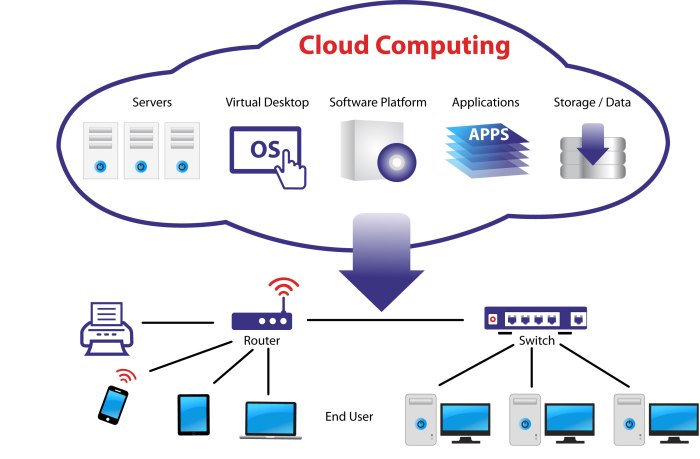
In the dynamic world of cloud computing, interoperability and integration are crucial aspects of designing robust and scalable cloud architectures. Interoperability refers to the ability of different cloud services, platforms, and applications to communicate and exchange data seamlessly. Integration, on the other hand, involves combining these disparate components into a cohesive and unified system.
Achieving both interoperability and integration is essential for organizations to leverage the full potential of cloud computing.
Challenges and Solutions
Integrating cloud services with legacy systems and applications often poses challenges due to varying data formats, protocols, and technologies. To address these challenges, organizations can employ various strategies:
- Standardization: Adopting industry-standard protocols and data formats ensures seamless communication between different components.
- APIs and Middleware: Utilizing application programming interfaces (APIs) and middleware platforms facilitates interoperability by providing a common interface for communication and data exchange.
- Integration Tools and Platforms: Leveraging cloud-based integration tools and platforms simplifies the process of connecting disparate systems and applications, reducing the need for custom development.
Examples of Successful Interoperability and Integration
Several cloud architectures have successfully demonstrated interoperability and integration, showcasing the benefits of these principles:
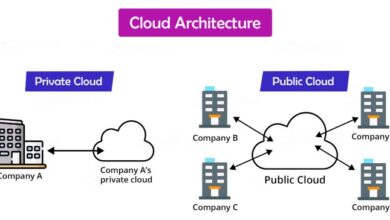
- Hybrid Cloud Architectures: Hybrid cloud environments seamlessly integrate on-premises infrastructure with public cloud services, allowing organizations to leverage the best of both worlds.
- Multi-Cloud Architectures: Multi-cloud strategies involve utilizing multiple cloud providers, enabling organizations to distribute workloads and mitigate vendor lock-in. Successful multi-cloud architectures require effective interoperability and integration mechanisms.
- Microservices Architectures: Microservices-based applications consist of loosely coupled, independently deployable services. Interoperability and integration are crucial for enabling communication and data exchange among these microservices.
Sustainability and Green Computing
Cloud architecture plays a pivotal role in promoting sustainability and green computing by optimizing resource utilization, reducing energy consumption, and minimizing carbon footprint. Cloud providers employ various strategies to achieve these goals, including:
Energy-Efficient Data Centers
Cloud data centers are designed to operate efficiently, utilizing renewable energy sources, implementing advanced cooling systems, and optimizing server utilization to minimize energy wastage.
Virtualization and Server Consolidation
Virtualization allows multiple workloads to run on a single physical server, maximizing resource utilization and reducing the number of servers required. Server consolidation further optimizes resource allocation by eliminating underutilized servers.
Efficient Resource Allocation
Cloud platforms employ intelligent algorithms to allocate resources dynamically based on workload demands, ensuring optimal utilization and minimizing idle resources.
Green Cloud Services
Cloud providers offer green cloud services that specifically focus on sustainability. These services use renewable energy sources, implement energy-efficient technologies, and provide carbon footprint tracking tools to help organizations reduce their environmental impact.
Examples of Sustainable Cloud Architectures
Google Cloud Platform
Google’s data centers utilize renewable energy sources and implement advanced cooling systems to minimize energy consumption. The platform also offers carbon footprint tracking tools and carbon-neutral cloud regions.
Microsoft Azure
Azure data centers are designed for energy efficiency, utilizing renewable energy sources and implementing innovative cooling techniques. Azure also provides tools for carbon footprint tracking and offers carbon-neutral cloud regions.
Amazon Web Services (AWS)
AWS data centers are powered by renewable energy sources and employ energy-efficient technologies. AWS offers tools for carbon footprint tracking and provides carbon-neutral cloud regions.
Last Recap
As we conclude our exploration of cloud architecture design principles, it becomes evident that these principles are the cornerstone of a successful cloud journey. By adhering to these guiding principles, organizations can harness the transformative power of the cloud, driving innovation, agility, and cost-effectiveness.
The cloud architecture landscape continues to evolve, and these principles will remain the bedrock upon which future advancements and breakthroughs will be built. Embrace the principles, embrace the cloud, and unlock a world of limitless possibilities.