In the ever-evolving landscape of cloud computing, the concept of cloud architecture patterns has emerged as a guiding force for organizations seeking to optimize their infrastructure and applications. These patterns provide a structured approach to designing, implementing, and managing cloud solutions, enabling businesses to harness the full potential of the cloud.
From monolithic to microservices and serverless architectures, the world of cloud architecture patterns is vast and complex. Understanding the nuances of each pattern, their advantages, and challenges is crucial for making informed decisions that align with specific business needs and objectives.

Definition and Overview
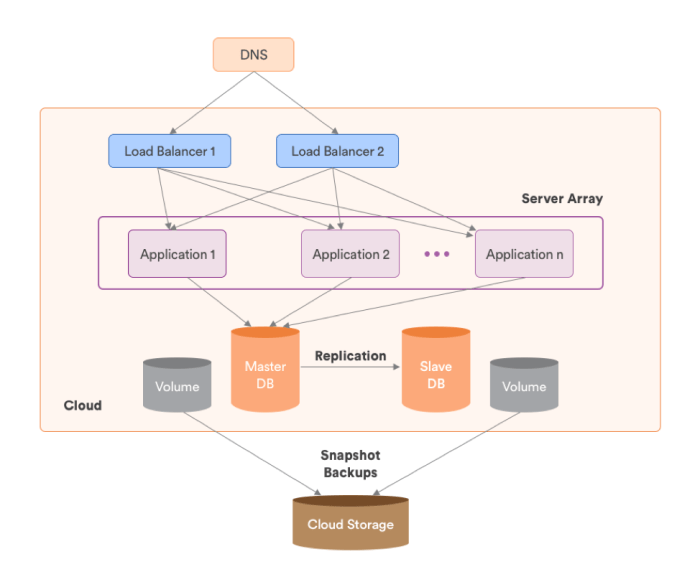
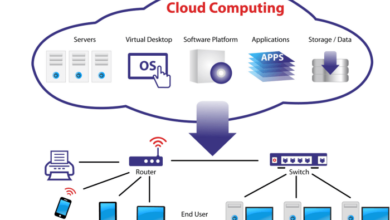
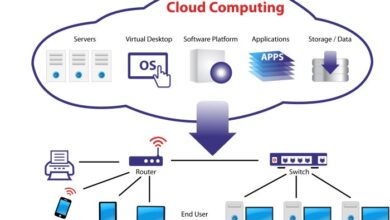
In the realm of cloud computing, architecture patterns serve as blueprints for designing and structuring cloud-based systems. These patterns provide a systematic approach to organizing and managing cloud resources, optimizing performance, scalability, and cost-effectiveness. By leveraging cloud architecture patterns, organizations can create robust, scalable, and flexible cloud-based solutions that align with their specific business objectives.
Examples of common cloud architecture patterns include:
- Monolithic Architecture: A traditional approach where all application components are tightly coupled into a single, cohesive unit. This pattern offers simplicity and ease of management but lacks scalability and flexibility.
- Microservices Architecture: An architectural style that decomposes an application into a collection of loosely coupled, independent services. This pattern promotes scalability, resilience, and continuous deployment but can introduce complexity in managing inter-service communication.
- Serverless Architecture: A cloud computing execution model where the cloud provider dynamically manages the allocation and provisioning of resources. This pattern eliminates the need for server management and scaling, allowing developers to focus on application logic and functionality.
Utilizing cloud architecture patterns offers several benefits, including:
- Improved Scalability: Cloud architecture patterns enable systems to scale elastically, adapting to changing demands and workloads.
- Enhanced Performance: By optimizing resource utilization and minimizing latency, cloud architecture patterns can improve application performance.
- Cost Optimization: Cloud architecture patterns promote efficient resource allocation, reducing infrastructure costs and optimizing cloud spending.
- Increased Reliability: Cloud architecture patterns incorporate redundancy and fault tolerance mechanisms, ensuring high availability and reliability of cloud-based systems.
- Accelerated Innovation: Cloud architecture patterns facilitate rapid development and deployment of new features and services, enabling businesses to stay competitive and innovative.
However, it’s important to acknowledge the challenges associated with using cloud architecture patterns:
- Complexity: Implementing and managing cloud architecture patterns can be complex, especially for large-scale and distributed systems.
- Security: Cloud architecture patterns introduce shared responsibility models, requiring organizations to address security concerns and ensure data protection.
- Vendor Lock-in: Some cloud architecture patterns may lead to vendor lock-in, limiting the flexibility to switch between cloud providers.
- Cost Management: Organizations need to carefully monitor and manage cloud usage to avoid unexpected costs and ensure cost-effectiveness.
Types of Cloud Architecture Patterns
Cloud architecture patterns are frameworks that guide the design and implementation of cloud-based solutions. They provide a structured approach to building scalable, reliable, and secure cloud systems.
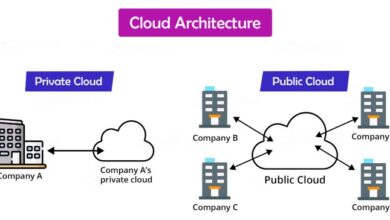
There are four main types of cloud architecture patterns: public cloud, private cloud, hybrid cloud, and multi-cloud.
Public Cloud
A public cloud is a cloud computing service that is provided by a third-party provider, such as Amazon Web Services (AWS), Microsoft Azure, or Google Cloud Platform. Public clouds offer a wide range of services, including compute, storage, networking, and databases.
Advantages of Public Cloud:
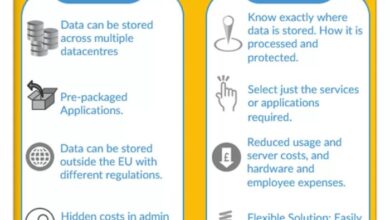
- Cost-Effective: Public clouds offer pay-as-you-go pricing, which can save businesses money compared to traditional on-premises infrastructure.
- Scalability: Public clouds can easily scale up or down to meet changing business needs.
- Reliability: Public clouds are designed to be highly reliable and offer a high level of uptime.
- Security: Public clouds offer a variety of security features to protect data and applications.
Disadvantages of Public Cloud:
- Limited Control: Businesses have less control over the infrastructure and services in a public cloud.
- Security Concerns: Some businesses may be concerned about the security of their data in a public cloud.
- Vendor Lock-In: Businesses may become locked into a particular public cloud provider, making it difficult to switch providers.
Examples of Organizations Using Public Cloud:
- Netflix: Netflix uses AWS to power its streaming service.
- Spotify: Spotify uses Google Cloud Platform to power its music streaming service.
- Airbnb: Airbnb uses AWS to power its online marketplace for vacation rentals.
Design Considerations
Designing a cloud architecture involves careful consideration of several key factors to ensure optimal performance, security, reliability, and cost-effectiveness. Selecting the right cloud architecture pattern based on specific requirements and constraints is crucial for successful cloud adoption.
Scalability
Scalability is a critical factor to consider when designing a cloud architecture. The architecture should be designed to handle increasing or decreasing demand for resources without affecting performance or reliability. This can be achieved through the use of elastic resources, such as virtual machines and containers, that can be easily scaled up or down as needed.
Security
Security is another important consideration in cloud architecture design. The architecture should be designed to protect data and applications from unauthorized access, both internally and externally. This can be achieved through the use of security measures such as encryption, access control, and intrusion detection systems.
Reliability
Reliability is essential for any cloud architecture. The architecture should be designed to minimize the risk of downtime or data loss. This can be achieved through the use of redundant components, such as multiple servers and storage devices, and by implementing disaster recovery plans.
Cost-effectiveness
Cost-effectiveness is also an important consideration in cloud architecture design. The architecture should be designed to optimize costs while still meeting the required performance and reliability levels. This can be achieved through the use of cost-effective cloud services, such as spot instances and preemptible instances, and by optimizing resource utilization.
Implementation Strategies
Implementing a cloud architecture pattern involves a structured approach to successfully migrate applications and data to the cloud. This section provides a step-by-step guide, detailing the processes involved, and sharing case studies of successful implementations.
Step-by-Step Guide to Implementing a Cloud Architecture Pattern
- Define Goals and Objectives: Clearly Artikel the desired outcomes and business objectives to be achieved through cloud adoption.
- Select a Suitable Cloud Architecture Pattern: Choose the most appropriate pattern based on the specific requirements, considering factors such as scalability, performance, and cost.
- Assess Existing Infrastructure and Applications: Evaluate the current IT environment, including hardware, software, and applications, to identify areas for optimization and migration.
- Design and Plan the Cloud Migration: Develop a detailed plan for migrating applications and data to the cloud, addressing aspects such as data transfer, security, and integration.
- Prepare the Cloud Environment: Set up the necessary cloud infrastructure, including virtual machines, storage, and networking, according to the chosen architecture pattern.
- Migrate Applications and Data: Transfer applications and data to the cloud using appropriate migration tools and techniques, ensuring minimal disruption to operations.
- Test and Validate the Migration: Conduct thorough testing to verify the functionality and performance of migrated applications and data in the cloud environment.
- Monitor and Manage the Cloud Environment: Implement ongoing monitoring and management processes to ensure optimal performance, security, and compliance.
Case Studies of Successful Cloud Architecture Implementations
- Netflix: Netflix successfully adopted a microservices architecture pattern to achieve scalability, flexibility, and agility in its streaming services.
- Airbnb: Airbnb utilized a multi-cloud architecture to optimize resource utilization, enhance reliability, and improve cost efficiency.
- Spotify: Spotify implemented a serverless architecture to handle its rapidly growing user base and ensure efficient resource allocation.
Security and Compliance
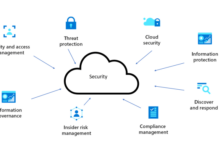
Security and compliance are paramount concerns in cloud architecture, as cloud environments can introduce new vulnerabilities and regulatory complexities. Addressing these challenges requires a comprehensive approach to securing data, applications, and infrastructure, while adhering to relevant regulations and standards.
Cloud providers typically offer a range of security features and services, including encryption, access control, and threat detection. However, the responsibility for securing cloud environments is shared between the provider and the customer. Customers must implement appropriate security measures within their own cloud deployments, such as:
Data Encryption
Encryption is essential for protecting data at rest and in transit. Cloud providers offer various encryption options, including encryption-as-a-service (EaaS) and client-side encryption. Customers should choose an encryption solution that meets their specific security requirements.
Access Control
Access control mechanisms, such as role-based access control (RBAC) and identity and access management (IAM), should be implemented to restrict access to cloud resources only to authorized users. Multi-factor authentication (MFA) should also be enabled to add an extra layer of security.
Threat Detection
Cloud providers offer a variety of threat detection services, such as intrusion detection systems (IDS) and security information and event management (SIEM) solutions. These services can help customers identify and respond to security threats in real time.
Regulatory Compliance
Organizations operating in cloud environments must comply with various regulatory requirements, such as the General Data Protection Regulation (GDPR), the Health Insurance Portability and Accountability Act (HIPAA), and the Payment Card Industry Data Security Standard (PCI DSS). Cloud providers can assist customers in meeting these requirements by providing tools and services that help them manage and monitor their compliance status.
Performance and Optimization
Optimizing the performance of cloud architectures is crucial to ensure efficient and seamless operations. By implementing effective techniques, businesses can improve application responsiveness, reduce latency, and handle increased workloads while maintaining stability and cost-effectiveness.
Techniques for Performance Optimization
- Choose the Right Cloud Service Model:
Selecting the appropriate cloud service model (IaaS, PaaS, or SaaS) aligns with specific application requirements. This ensures optimal resource allocation and cost efficiency. - Utilize Load Balancing:
Implementing load balancing distributes traffic across multiple servers or instances, preventing overloading and improving application responsiveness. - Leverage Caching Mechanisms:
Caching frequently accessed data and content reduces server load and improves application performance. Caching mechanisms like in-memory caching and content delivery networks (CDNs) can be employed for this purpose. - Optimize Database Performance:
Tuning database configurations, indexing strategies, and query optimization techniques can significantly enhance database performance and reduce query execution times. - Implement Microservices Architecture:
Breaking down applications into smaller, independent services enables scalability, flexibility, and faster development cycles. Microservices can be deployed and scaled independently, improving overall performance.
Common Performance Bottlenecks and Solutions
- Network Latency:
High latency can be addressed by selecting cloud regions closer to users, optimizing network configurations, and using fast and reliable network connections. - Resource Contention:
Contention for shared resources like CPU, memory, and storage can be mitigated by scaling resources appropriately, isolating workloads, and using resource management tools. - I/O Bottlenecks:
Slow I/O operations can be improved by utilizing SSDs, optimizing database I/O, and employing techniques like data partitioning and replication. - Inefficient Code:
Inefficient code can lead to performance issues. Regularly reviewing and optimizing code, using appropriate data structures and algorithms, and implementing code profiling can help address this.
Best Practices for Monitoring and Management
- Continuous Monitoring:
Continuously monitoring cloud resources, applications, and infrastructure components enables proactive identification and resolution of performance issues. - Performance Metrics:
Establish key performance indicators (KPIs) and metrics to measure and track application and infrastructure performance. - Capacity Planning:
Regularly assess resource utilization and forecast future demand to ensure adequate capacity and prevent performance degradation. - Performance Testing:
Conduct regular performance testing to identify potential bottlenecks and ensure applications can handle increased loads. - Automation:
Automate performance monitoring, alerting, and scaling processes to respond quickly to changing conditions and maintain optimal performance.
Cost Optimization
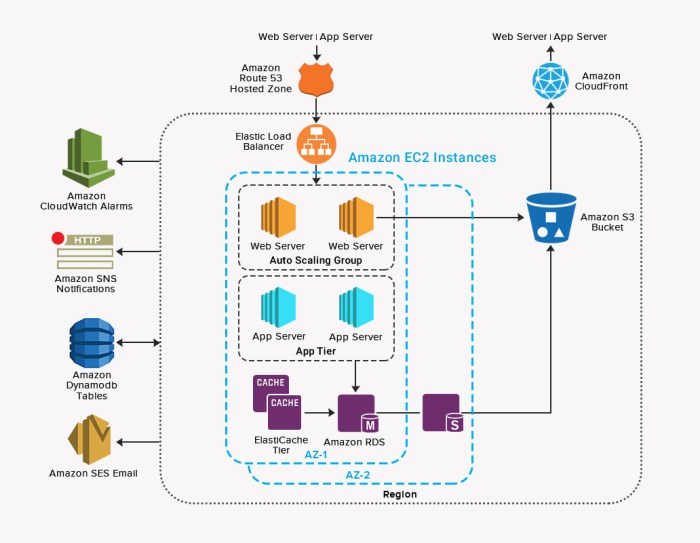
Intro ParagraphIn the realm of cloud computing, optimizing costs is a continuous endeavor for organizations. Leveraging cost-effective strategies can significantly reduce expenses without compromising performance.Explanatory ParagraphEffective cost optimization entails understanding the nuances of cloud pricing models, managing cloud resources efficiently, and employing innovative technologies.
It involves a holistic approach that considers the entire spectrum of cloud services, from infrastructure to platform to applications.
Understanding Pricing Models
- Pay-as-you-go (PAYG): The most common model, where organizations are charged based on the resources consumed.
- Flat-rate: A fixed price for a specific set of resources, offering stability but limited flexibility.
- Spot Instances: Discounted pricing for unused or surplus capacity, ideal for non-critical workloads.
- Reserved Instances: Committing to a long-term contract for a lower price, suitable for predictable workloads.
Managing Cloud Resources
- Right-sizing: Choosing the optimal instance type and resources for each application, avoiding overprovisioning.
- Auto-scaling: Dynamically adjusting resource allocation based on demand, ensuring efficient utilization.
- Resource Tagging: Assigning tags to resources for better organization and cost tracking.
- Cloud Cost Management Tools: Using specialized tools to monitor and analyze cloud usage and costs.
Adopting Innovative Technologies
- Serverless Computing: Eliminating the need to manage servers, reducing operational costs.
- Containers: Packaging and deploying applications in isolated environments, enhancing resource utilization.
- Cloud-Native Applications: Designing applications specifically for the cloud, optimizing performance and cost.
- Multi-Cloud Strategy: Utilizing multiple cloud providers for better pricing and avoiding vendor lock-in.
Case Studies
- Company A: Reduced cloud costs by 30% by implementing a multi-cloud strategy and leveraging spot instances.
- Company B: Saved 20% on cloud expenses by optimizing resource utilization and using serverless technologies.
- Company C: Achieved a 40% cost reduction by adopting a cloud-native application development approach.
Emerging Trends and Innovations
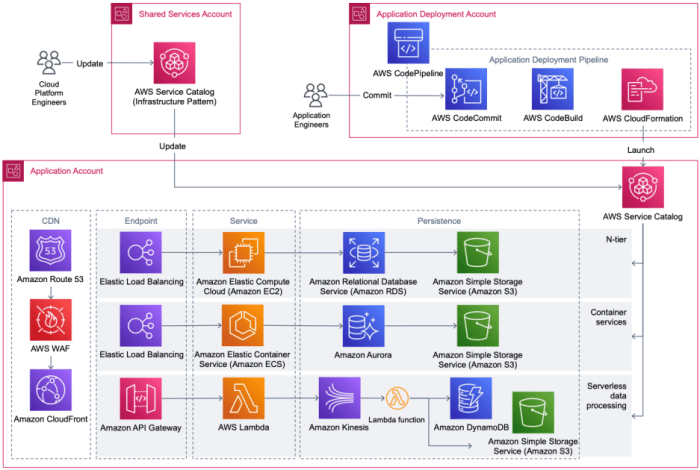
The cloud computing landscape is constantly evolving, with new trends and innovations emerging all the time. These trends are shaping the future of cloud computing and having a significant impact on cloud architecture design and implementation.
One of the most notable trends is the increasing adoption of hybrid and multi-cloud environments. This involves using a combination of on-premises, private cloud, and public cloud resources to achieve optimal performance, cost-effectiveness, and flexibility. Hybrid and multi-cloud architectures allow organizations to leverage the best of each cloud type while minimizing the drawbacks.
Serverless Computing
Serverless computing is another emerging trend that is gaining traction. This approach allows developers to build and deploy applications without having to manage the underlying infrastructure. Serverless platforms like AWS Lambda and Azure Functions handle the provisioning, scaling, and maintenance of servers, enabling developers to focus on writing code and business logic.
Edge Computing
Edge computing is a distributed computing paradigm that brings computation and data storage closer to the edge of the network, such as at branch offices, retail stores, or remote devices. This reduces latency and improves performance for applications that require real-time processing or access to local data.
Quantum Computing
Quantum computing is a rapidly developing field that has the potential to revolutionize cloud computing. Quantum computers can solve certain types of problems much faster than traditional computers, making them ideal for applications such as cryptography, drug discovery, and financial modeling.
Artificial Intelligence and Machine Learning
Artificial intelligence (AI) and machine learning (ML) are playing an increasingly important role in cloud computing. These technologies can be used to automate tasks, improve security, and optimize performance. For example, AI-powered chatbots can be used to provide customer support, while ML algorithms can be used to detect anomalies and identify patterns in data.
Final Summary
As cloud architecture continues to evolve, organizations must stay abreast of emerging trends and innovations to remain competitive. Embracing new technologies and best practices will enable them to optimize performance, enhance security, and reduce costs. By leveraging cloud architecture patterns strategically, businesses can unlock the full potential of the cloud, driving agility, innovation, and growth.